


John Mitchell, a well
respected economist, gave his economic update at the annual HFO Investor
Roundtable event January 8th.
It was another excellent presentation by Mr. Mitchell who has the
uncanny ability of making economic forecasting interesting.
To summarize Mr.
Mitchell’s economic forecast, he believes we will continue to see an improving
economy, albeit at a slow growth rate of about 2.0% annually. Certainly this is nothing to be excited about
but it’s far better than falling into recession.
What I would like to
focus my attention on today are Mr. Mitchell’s comments about where interest
rates are heading over the foreseeable future.
So let’s first discuss what The Federal Reserve has been doing recently and
then discuss what policies they intend to adopt going forward.
·
From the standpoint of monetary policy, The
Federal Reserve cannot push interest rates down any further. Short term rates are near zero and they can’t
go any lower than that.
·
The end of last month, The Fed’s Operation Twist
was terminated. This program manipulated
the market by selling short term treasuries and purchasing long term treasuries
which has resulted in driving down long term interest rates.
·
The Fed recently announced QE4. Recall that quantitative easing is an
unconventional monetary policy of buying financial assets from banks and
private institutions thus injecting a quantity of money back into the economy
for the purpose of stimulating economic activity.
Now let’s see what The
Federal Reserve plans to do going forward.
QE4, as it is being implemented this time around, has two components: 1)
the purchase of $45 billion of U.S. Treasuries a month with maturities in the 4
to 30 year range; and 2) the purchase of $40 billion a month of mortgage back
securities. Both types of purchases will
keep long term interest rates artificially low.
The Federal Reserve
announced in December that they plan to keep interest rates exceptionally low
as long as unemployment remains above 6.5% and inflation is no more than
2.5%. Currently, the U.S. unemployment
rate is 7.7%. The buying of securities by
The Fed is open ended until these two benchmarks are achieved.
So the big question is:
Do you think that the unemployment rate will decline significantly in 2013 or that
there will be a jump in inflation this year in order for QE4 to be
discontinued? Not very likely is
it? As much as I would like to see
unemployment fall below 6.5%, at the present pace of the economy we are likely two
to four years away from that happening.
Mr. Mitchell then posed a
very troubling question to the audience: How will The Federal Reserve unwind
QE4? The Fed currently owns about $3
trillion in securities. By the end of
the year that number will be about $4 trillion.
Discontinuing QE4 will result in a significant “pop” in interest rates
and selling the $4 trillion they currently own will further cause interest
rates to rise. Long term this looks like
a gigantic problem with no easy solution.
But back to the original
question: Where can we anticipate interest rates to go this year? It all depends on our economy. There are two likely scenarios.
1.
If the economy continues at the current pace,
then interest rates should stay where they are.
2.
If the world economy begins to slow down at the
end of this year due to the current recession in Europe and the economic slowdowns
of other countries such as China, Japan and Brazil, then our economy will begin
to slow down too. If the U.S. economy
were to show signs of a recession I believe The Federal Reserve will double
down on its efforts to keep the economy going.
If true they would buy more securities which means interest rates would
go down even lower than they are today.
I believe there
is no chance that rates will go up this year as long as QE4 is being
implemented. In fact I will go out on a
limb and say I believe the second scenario is the more likely. If true, then interest rates a year from now
will be lower than they are today.
Either
scenario bodes well for commercial real estate.
Keeping interest rates low will continue the current trend of rising
real estate values in the Pacific Northwest.
MCF Market Watch
Welcome!
In the interest of keeping our clientele educated and well-informed in a trying economy, MCF issues bi-weekly market assessments.
Go to our web site to subscribe to this and other news and tools, including the MCF Rate Sheet and Mortgage Solutions - Real Quotes On Real Deals (TM).
Follow us online!
Saturday, January 19, 2013
John Mitchell’s Interest Rate Forecast

Tuesday, August 14, 2012
Why Inflation Is Just Around the Corner
Thirty years have passed since we’ve had a significant
bout of inflation in this country. At
the peak of this inflation battle my money market account earned 21 percent
interest! That was the good side of
inflation. The bad side of inflation was
banks pretty much stopped lending and the only lending getting done was seller
financed or other creative forms of hard money lending.
For the past 30 years we’ve seen interest rates slowly
decline on commercial real estate from 12 percent to now 4 percent or less. I believe the days of ever lower interest
rates are coming to an end. In fact, I
believe the days of double digit inflation is inevitable and I believe it’s
just around the corner.
But before I go further on what I believe is in store
for us as a nation, let’s review what inflation is and what causes it.
What
is inflation?
Inflation is an increase in the price of goods and
services not due to growing demand or shrinking supply for those goods and
services (which also affects price) but due instead to the dollar losing its
buying power.
There is a difference between real price increases and
inflation. The price of oil could be
going up because we are running out of easy-to-find oil, or demand has gone up
because China’s rapidly growing economy is demanding more oil. That’s not inflation; that’s a real price
increase due to the forces of supply and demand.
What is causing the money supply to expand so rapidly?
Good question. The truth is no one knows when it will begin in earnest. The authors of Aftershock: Protect Yourself and Profit in the Next Global Financial Meltdown believe that significant inflation will begin in the 2013-2015 range.
What does this mean for commercial real estate?
Tuesday, September 20, 2011
China to Start Liquidating US Treasuries
Over the past several blog posts, I've focused almost exclusively on the sovereign debt crisis in Europe, and for good reason. The next jolt to the world economy will likely come from Europe. How well or should I say how poorly the European Union handles Greece defaulting on its bond obligations will determine the severity of the impact on the world economy. There are lots of interesting articles on the sovereign debt crisis in Europe that I could write about. But I'm going to let that situation percolate awhile and instead focus on an obscure article I read recently in the British newspaper, The Telegraph.
In this article by Ambrose Evans-Pritchard, the head of China's central bank stated that Beijing plans to reduce its portfolio of US bonds as soon as it is safely possible. At the World Economic Form, Li Daokui, stated that China will in the future be investing more in physical assets. "We would like to buy stakes in Boeing, Intel, and Apple... Once the US Treasury market stabilizes we can liquidate more of our holdings of Treasuries," he said.
It is estimated that China owns $2.2 trillion of US debt, and is second only to The Federal Reserve in the amount of US debt owned. While China accumulated US bonds over the last three decades, The Fed accumulated its bonds in the last couple of years as a result of the Quantitative Easing program, which ended in June of this year.
China is clearly worried that about the US debt issue, which now exceeds $14 trillion. Mr. Li described the debt deals this summer on Capitol Hill as "just trying to buy time," saying it will not be enough to stop the growing debt crisis that is mounting.
It's always interesting to see how the rest of the world looks at us in the United States. So hearing the comments of a Chinese official in a British newspaper about how the U.S. is handling it's debt crisis is like being the proverbial fly on the wall listening into a conversation about your class behavior between your grade school teacher and your mom. It's interesting to hear what they're thinking but at the same time you know there's going to be consequences.
So why is this proposed change in China policy important to those of us in the commercial real estate industry in the Pacific Northwest? Why should we care whether the Chinese are buying more of our debt or conversely liquidating their holdings of US bonds? BECAUSE U.S. TREASURY RATES ARE DETERMINED BY SUPPLY AND DEMAND!!!
We now know that both The Federal Reserve and China are planning to stop buying our debt. So what happens when the top two buyers of our debt are no longer buying? To make matters worse China intends to liquidate some or all of their holdings of US debt which will only add to the supply of bonds available on the market to be purchased. Is it conceivable that the rest of the world can purchase their normal market share of US debt plus China's and The Fed's too? I don't think so. Logic tells me it's not possible but smarter people than me who are in the know may disagree.
Assuming I'm correct, then the rest of the world cannot buy the volume of debt we are currently hemorraghing. What then? That means over time treasury yields (interest rates) will have to increase in order to entice enough buyers to buy our debt. If treasury rates go up, then interest rates of all kinds will follow, including interest rates on commercial real estate. One offsetting factor are the spreads over treasury rates that lending institutions are charging these days are close to an all time high. If lenders wanted to absorb some of the rise in treasury rates they could do so by lowering the spreads they are charging. That is a possibility. Another possibility is that Congress and the president could pass meaningul legislation to reduce our budget deficits. I'll let you determine the chances of that happening...
Source: China to 'liquidate' US Treasuries, not dollars; The Telegraph Blogs, by Ambrose Evans-Pritchard, September 15, 2011.
Monday, September 5, 2011
How Bill Gross Got It All Wrong
Earlier this year Bill Gross, the head of bond giant PIMCO, announced in grand fashion that he was getting out of U.S. Treasuries. His reasoning was quite rational: The end of the Fed's quantitative easing program, which ended in June, would be bad for bonds. Prices would fall causing yields (or interest rates) to rise. This would happen because the Fed was the number one buyer of U.S. debt. Without the Fed buying bonds one of two things would have to happen to prevent yields from rising:
- Some other country would have to step in to buy the Fed's volume of U.S. Treasuries which was highly unlikely, or
- The U.S. government would have to significantly moderate their borrowing to shrink the volume of U.S. Treasuries being sold on the market. At the present time for every $1 spent by the federal government about 40 cents of that amount is borrowed.
This past week people were crowing about how Bill Gross got it all wrong and how he lost a lot of money for his bond fund investors. He even admitted sheepishly that it had been a "mistake" to get out of U.S. treasuries. Since Mr. Gross’s announcement in March the 10 year treasury rate has plummeted from 3.46% to 2.02% (Sep 2nd). So how does someone of Mr. Gross's caliber get it wrong? What did he miss?
Back in March when Mr. Gross made his announcement there was no way for anyone to predict:
- That the sovereign debt crisis in Europe would reach critical mass this year. European leaders had been successful over the years in “kicking the can down the road” and it seemed likely this year would be no different. Wrong!
- What the impact of the sovereign debt crisis would have on the U.S. treasury market. Fear of a default of sovereign debt by Greece and then by Italy has caused a panic among Europeans. And when panic ensues, investors take their money out of risky investments promising a return on their money and instead invest in less risky investments, in this case U.S. treasuries, where they focus on getting a return of their money.
But the big question is, “How does this affect those of us in the commercial real estate market?” We are currently seeing historically low interest rates. A lower interest rate means a lower mortgage payment which means better cash flows after debt service. If you own commercial real estate now is the time to lock in long term fixed rate financing.
I know I sound like the boy who cried wolf one too many times but some day we are all going to wake up and the world will be different. Some unpredictable catastrophic event will have occurred (a run on U.S. banks perhaps) causing interest rates to skyrocket and when that happens those who had the foresight to lock in the low rates will be the big winners.
Source: Bill Gross and the Case for Buy Low and Hold, Morgan Housel, The Motley Fool, August 31, 2011.
Saturday, July 30, 2011
What Happens if Debt Ceiling is Not Raised?
You may be thinking I'm going to weigh in on the debt ceiling debate. This reminds me of the old saying, "Fools rush in where angels fear to tread." I'm not going there. Not a chance. I've heard everything from the world is going to end to nothing is going to happen and everything in between. And likely you have too.
What I am going to discuss is a bizarre side effect of this fiasco: contrary to everything I've ever read on this subject interest rates on U.S. treasuries are plummeting. What's going on here???
Regardless of what happens on the debt ceiling debate the U.S. is likely to lose its triple A bond rating. The rating agencies have been threatening a down grade of our nation's credit rating not unless $4 trillion is reduced from our spiraling out of control federal deficit. None of the proposals currently being considered are close to this amount of deficit reduction. So the likely effect will be a downgrading of our bond rating. If this happens then logic dictates that interest rates on everything will go up, from credit cards, to auto and home loans to loans on commercial real estate. But no one really knows for sure the consequences of a down grading of our bonds. No one.
So how is it that on Friday last week the 10 year treasury rate plummeted 17 basis points and is now at 2.78% as of this writing? This is the biggest one-day drop since December 2010. A drop in interest rates seems so counterintuitive to me. This is just the opposite of what I would think would happen. The "experts" believe that investors view the stock market as being more adversely impacted by the debt ceiling debate than the bond market. As a result investors are selling stocks (notice the Dow Industrials declined 537 points last week, the worst week this year) and are buying bonds. Go figure! There is a "flight to quality" - the selling of riskier assets, in this case equities, and the buying of the most secure investment available today - treasuries.
Other so-called safe havens will also benefit from this uncertainty caused by the debt ceiling crisis. But gold, top-rated corporate debt or the bonds of other countries with triple A ratings are miniscual markets in comparison to the almost $10 trillion U.S. treasury market. Investors are also confident that the U.S. Treasury will continue to pay the principal and interest owed on existing bonds, even in the case of a prolonged deadlock.
In addition it is in China's best interest, as the largest holder of U.S. debt, to come to our rescue if things got out of hand with a gridlocked Congress in order to prevent serious harm to their huge existing holdings of U.S. treasuries.
So for these reasons we are seeing treasury rates declining. At least for now. This is a great time to be locking in long term fixed rate financing. If you are on the sidelines wondering when I should refinance, what are you waiting for?
Sources: Debt Ceiling Deadlock Could Lower Interest Rates, CNNMoney.com, July 28, 2011; and Treasury Yields Fall By the Most This Year, Market Watch, July 29, 2011.
Tuesday, April 12, 2011
What Impact Will Inflation Have on Commercial Real Estate?
- The Producer Price Index (PPI), which measures average changes in prices received by domestic producers for their output, is up 5.6% for the twelve months ending February 2011.
- Commodity prices are rising in relation to the dollar. The price of gold hit an all time high earlier this week before settling down a bit. Silver prices continue to soar hitting a 31 year high. So far this year silver has gained 33% in value.
- A recent Deloitte Consulting poll indicated that 74% of those polled believe their spending will slow due to rising prices they are currently experiencing.
In the long run, modest inflation would be a great benefit to commercial real estate, as long as it happens gradually so that the market can make the necessary adjustments along the way. Real estate over the long run has been an excellent inflation hedge and it should be the same this time around too. Over time, with modest inflation those commercial real estate investors who are currently upside down on their investment portfolio could gradually become whole again.
My greatest fear is what happens in June when the Federal Reserve ends its own bond purchase program known as quantitative easing. Who will fill the gap in buying U.S. Treasuries? If no one steps in to the fill the void what will happen to interest rates? Doesn't the law of supply and demand require that interest rates have to increase? And more importantly how quickly will they rise and how dramatically?
Those are the questions that are currently being debated. Surprisingly there is no clear consensus among the pundits. We'll have to watch and see. Stay tuned. It's going to be fascinating to watch!
Sources: PIMCO bets against U.S. government debt, Reuters, April 11, 2011; Don't Believe the Inflation Fear-Mongers, The Mark, April 12, 2011; Inflation Not a Threat? Most Consumers Aren't So Sure; CNBC.com, April 12, 2011; Gold Price Sinks After Hitting Ne High at $1,478, Gold Alert, April 11, 2011; Producer Price Indexes - February 2011, Bureau of Labor Statistics, March 16, 2011.
Wednesday, March 16, 2011
Bill Gross Thumbs Nose at Bond Market
Last week Bill Gross, who runs the world's largest bond fund at Pacific Investment Management Co., sold all government related U.S. debt from PIMCO's $237 billion Total Return Fund. You may be thinking, "Why is this tidbit of news important to us?" Good question. When someone who is as knowledgeable about the bond market as Mr. Gross decides to get out of U.S. bonds there's a good chance that something signficant is about to happen. Gross is betting that the discontinuation of the Federal Reserve's Quantitative Easing program (QE2) in June will have a negative overall impact on the bond market.
Let's back up for a minute and explain some things. QE2 is the Federal Reserve program of buying U.S. government debt instruments for the purpose of stimulating the economy. In a period of only 28 months the Federal Reserve has become the largest owner of U.S. Treasury Bonds ($972 billion as of December) surpassing both China and Japan who took decades to accumulate their bond holdings. Yesterday, Mr. Bernanke, Chairman of the Federal Reserve confirmed that the Fed will discontinue QE2 as planned by the end of June.
Bill Gross wonders when the Fed stops buying bonds who will take their place? The Federal Reserve is currently buying $75 billion in U.S. bonds a month. That's a huge amount. So what will be the impact when the Fed stops buying? It all goes back to the law of supply and demand. If the supply of U.S. treasuries remains the same but the #1 buyer of bonds is no longer buying, in order to get others to absorb the excess supply the market will demand a higher rate of return. It's as simple as that. Gross believes that the current interest rate on 10 year treasuries is at least 100 basis points below the historical average.
If Mr. Gross is correct the logical result will be a significant rise in interest rates and it should happen before the end of this year. If true this could have a dramatic impact on the commercial real estate market. Rising rates would require a re-adjustment in cap rates upward to offset the decline in investment returns due to higher interest rates.
Years ago there was a TV ad by investment banking firm E.F. Hutton. The ad shows an E.F. Hutton fiancial advisor about to give confidential investment advice to his client in a crowded, noisy room. Before the advisor speaks the crowd stops talking and leans their ear to hear what he has to say. The ad ends with the slogan, "When E.F. Hutton speaks people listen." Mr. Gross has just spoken and his actions speak loud and clear. Are we wise enough to follow his lead is the only question?
_________________________________________________
On a totally different note, treasury rates have plunged in the last few days. The 10 Year Treasury rate at this moment is 3.20%, down 55 basis points since January. On the surface this flies in the face of what is being predicted by Mr. Gross. In reality this substantial dip in rates is being caused by the crisis in Japan. Japan's stock market, has plunged 16% in the last couple of days and investors are taking their money out of their stock market and putting it into the safest investment they know: U.S. Treasurys. How ironic.
Sources: Gross Sees Trouble Ahead for Treasurys, The Oregonian, March 15, 2011; Pimco's Bet Against Treasurys Not Working (So Far), Wall Street Journal, March 15, 2011; Federal Reserve Enters Final Lap of Easing Policy, National Journal by Clifford Marks, March 15, 2011.
Tuesday, January 4, 2011
My Crystal Ball Forecast for 2011 Commercial Real Estate
Doug Marshall, CCIM
Market Assesment Back in December I asked my reading audience to give their opinions about what the commercial real estate market would look like in 2011.
I was pleasantly surprised by the number of people who responded. Thank you. Generally those who responded had similar thinking about the coming year as I did. So here goes:
· It’s the economy stupid! Everything hinges on what the economy ends up doing. The good news is that the economy is on the upswing. I know it doesn’t feel that way but the economy is on the rebound, albeit ever so slowly.
The recent compromise tax bill maintaining the Bush era tax rates for another two years and lowering the payroll tax by 2 percent will have a positive impact on the economy. So I’m expecting a modest improvement in the overall economy by the end of the year.
· Rising interest rates. No one expects interest rates to stay at the current level. We are all predicting them to rise, the only question is how much. If they rise gradually over time we’ll be OK. If they rise dramatically over a short period of time, like they did from early October through mid December of 2010, it will shut down our industry until real estate prices adjust to the higher rates.
The consensus is that rates will rise slowly. Let’s hope we’re right. The alternative would be disastrous
· 
I also see a few lenders getting back in the retail side of the market. Lenders are showing more interest but underwriting will continue to be difficult. I think there will be more lenders in the market as their balance sheets improve. We are not over the banking crisis but we are beginning to see a light at the end of the tunnel.
· What property types will show increased sales in 2011 over the prior year? Everyone agrees there will be increased sales transactions in 2011. That’s probably because to be in commercial real estate you have to be a cockeyed optimist! However there wasn’t a consensus as to which property types will show the most improvement. This is my take: I believe all property types except for land and hotels will show improved sales activity this year.
However for most property types, office, retail and industrial, the properties that are distressed with blood in the water will be in demand and those that are strong credit tenant properties will also be in demand. Everything in between will likely have very little sales activity.
Lenders have shown little appetite for properties that have any “hair” on them whatsoever, i.e., high vacancy, rental rates trending down, short lease terms, etc. Apartments, being the exception will do fine regardless of size, condition, and location as there are several lenders wanting to finance apartments with more recently coming into the market.
· Where are vacancy rates, concessions and rental rates heading? Improvement in vacancy rates, concessions and rental rates will be dependent on job growth, especially for office and industrial properties. Apartments and retail are less dependent on job growth but they too would show improved demand if the unemployment rate were to dip a bit.
· What will cap rates do? I think rising interest rates will stop any fall we might have seen in cap rates due to improving fundamentals and demand. They will counterbalance one another.
I believe it is possible that the top of the line properties may see some improvement in cap rates but all other properties will see either have a flat or slightly rising cap rate during the year.
Thursday, December 16, 2010
What’s Going On With Interest Rates?
by Doug Marshall, CCIM
Market Assessment
Over the past 60 days, the yields on 10-year Treasury notes have increased from 2.41% on October 8th to 3.53% as of December 15th, an increase of 1.12%.
What's going on?
All of the marketable Treasury securities are very liquid and are heavily traded on the secondary market. The treasury yield expresses the relationship between the face value of the security and the amount of return the investor receives.
If there are more investors selling bonds then those who are buying bonds, the value of the bond declines (the law of supply and demand). A reduced price on the bond results in an increase in the yield or return on the bond.
So the $64,000 question is, “Why are bond holders selling off their bonds?” I have surfed the web for an answer to this question and unfortunately there is no agreement among the experts.
Depending on who you like to read there are a variety of answers. But being fearless and little bit stupid I am going to give you my opinion (take it for what it’s worth).
But before I give you my assessment of the situation let me muddy the waters a bit with some conflicting information.
And with more Quantitative Easing 2 purchases on the horizon it is highly probable that this lead will be greatly extended.
At the very same time, the debt crisis in Europe with what has happened in Greece and Ireland is continuing. Adding to the problem, on Tuesday Moody’s downgraded Spain’s sovereign debt causing further turmoil in the bond market. There is a very real debt crisis going on in Europe which is resulting in European investors transferring their wealth into (you guessed it) U.S. treasuries.
Why are they running scared? There are two reasons that I think make the most sense
- The Fed’s policy of QE2 is not working as planned. The printing of money by the U.S. Treasury and the purchase of these bonds by The Fed is perceived by the holders of bonds to be inflationary which makes their modest fixed yields less desirable if inflation is going to come roaring back
- The other issue spooking bondholders that’s surfaced recently is the possible agreement by the Obama administration and Congress about extending the Bush era tax rates for another two years.
The compromise between the White House and Republicans included extending employment benefits for another 13 months which combined with extending the existing tax rates will increase the national debt by another trillion dollars. This means the U.S. Treasury will need to issue more bonds to cover the debt.
That being said, I believe that Ben Bernanke will do everything in his power to calm the bond market. What tricks he still has in his bag is anyone’s guess but he will do whatever he can to avoid runaway inflation.
Stay tuned. It’s beginning to get interesting.
Sources:
Fed Surpasses China in Treasury Binge, The Street by Eric Rosenbaum, December 15, 2010;
United States Treasury Securities, Wikipedia;
Bond Prices Fall Sharply after Federal Reserve Says It Will Continue to Boost Economy, The Associated Press, December 14, 2010.
Saturday, December 4, 2010
What the heck is Quantitative Easing?
Doug Marshall, CCIM
Market Assessment
The term Quantitative Easing (QE) describes a form of monetary policy used by The Federal Reserve to increase the supply of money in an economy when the bank interest rate, discount rate and/or interbank interest rate are either at, or close to, zero.
The Federal Reserve does this by first crediting its own account with money it has created ex nihilo ("out of nothing") or some would say, by “printing money.” It then purchases financial assets, including government bonds and corporate bonds, from banks and other financial institutions in a process referred to as open market operations.

What is the purpose of Quantitative Easing?
The Federal Reserve has been given two mandates:
1. It is charged with ensuring full employment in the United States; and,
2. It is also charged with ensuring price stability. Inflation, in recent months, as measured by the CPI (Consumer Price Index), has declined to almost zero which is well below its target of two percent annually.
The Fed hopes that QE will stimulate the economy and thereby ease unemployment.
The Fed also hopes QE will bring the U.S. closer to its stated long-term inflation target.
The primary risk of QE is that it can spark inflation greater than desired or even hyperinflation. Or it could have no impact whatsoever.

What has been the impact of Quantitative Easing so far?
The first round of Quantitative Easing took place at the height of the financial crisis in late 2008 and early 2009. What impact did QE have on the economy and interest rates? Good question. I’m not sure anyone knows for sure.
Just recently the Federal Open Market Committee announced another round of Quantitative Easing called QE2. The Fed plans to purchase over $600 billion of long-dated Treasury securities over a period ending in June 2011.

The table details the changes in constant-maturity Treasury rates since August 1, 2010. While rates are still comparably low, they have risen significantly in recent weeks.

As convincing as this table is in supporting Dr. Jones’s opinion, I don’t think anyone can know for sure if the recent rise in interest rates can be directly attributed to the announced purchase of $600 billion of treasury securities over the next several months.

But then again, who am I to disagree with such a distinguished and well qualified expert? We should know though in the next few months whether Dr. Jones is right or not. Let’s hope for all our sakes he’s not.
Sources:
Quantitative Easing by Wikipedia;
Does Quantitative Easing Work in Boosting the Real Ecomony? by Edward Harrison, November 4, 2010;
'Quantitative Easing': What Does It Really Mean for Investors?, Jeff Cox, CNBC.com, August 23, 2010;
Quantitative Easing Already Goosing Interest Rates, Ted Jones, Jones on Real Estate blog, November 14, 2010.
Tuesday, November 2, 2010
Why Interest Rates Will Rise
Doug Marshall, CCIM
M
Shown below is an article written by Ted Jones, PhD who is the Senior Vice President-Chief Economist for Stewart Title Guaranty Company.
Mr. Jones opines about why interest rates will rise in the near term. He predicted back in August that rates would rise 100 basis point increase (1%) before the end of this year!
I wrote last month how a typical Japanese investor that had purchased a two-year Treasury note lost more than 10 percent per year on their investment – see post from September 27th – and that the only way they would keep coming back and buying U.S. Treasury instruments would be an increase (eventually) in interest rates.
My response is that there is massive demand for money—but not in the typical avenues of home purchases, autos and other durable goods—and that is in record federal deficit financing and corresponding record-trade deficits.
Just look at the article link from the Wall Street Journal on Friday. The August trade deficit approached $50 billion ($46.3 billion to be exact) of which $28 billion was with China (and the $28 billion was an all-time record). Wow.
Looking at it another way, just contrast the Federal deficit of 2009 through 2011 to total commercial real estate lending in place and total first-lien residential loans in place.
Fannie Mae estimates that as of 2010 first-lien residential lending outstanding is $9.6 trillion and other sources tally total commercial real estate lending at $3.5 trillion. Total Federal deficits in 2009, 2010 and 2011 are estimated to be $1.4 trillion, $1.3 trillion and $1.1 trillion, respectively, for a total of $3.8 trillion.
That means that in just a 36 month period, the Federal government borrowed more money than all of the total commercial real estate loans outstanding. When comparing residential lending, that equates to 40 percent of the amount of the total first-lien lending outstanding on U.S. homes. Now you see that there is significant demand for borrowing.

The Fed released on Friday their expectations on inflation, but do not be surprised if they respond by stating they are going to increase the money supply by printing more money—which in the long run will be inflationary.
And that is my two cents. Or with inflation 2.08 cents……

My guess is that everything would come to a stop until cap rates adjusted upward. And if you haven’t refinanced your properties, what are you waiting for?
Thursday, September 23, 2010
Global Economic Issues Raise Their Ugly Head
Doug Marshall, CCIM
Market Assessment
 I thought you would find the following article from Pacific Investment Management Company’s Chairman, Mohamed A. El-Erian interesting and informative.
This article was originally published on ftalphaville.ft.com on September 19, 2010. PIMCO is an investment company that manages the Total Return fund, the world’s largest mutual fund.
Shown below are Mr. El-Erian’s thoughts about two very important global economic issues.
--------------------------------------------------------------------------------------------
This coming week will be an interesting one. I am not just thinking of Tuesday’s FOMC meeting in Washington that will shed light on whether the Federal Reserve revises down its economic growth projections (it should and, I suspect, will) and expands non-conventional policies (it will, but probably not at this meeting).
I am also thinking of two other issues which were left to simmer quietly over the last few months when most of the focus was on America’s "recovery summer" — or, to be more exact, the lack thereof.
Last week’s catalyst was Ireland where banking issues are a serious worry. But the underlying problems are deeper and more complex.
Market measures of risk for peripheral European countries (Greece, Ireland, Portugal and Spain) are at or near danger levels… despite exceptional support from the European Central Bank, the European Union and the International Monetary Fund, and despite the implementation of adjustment measures on the part of some.
The failure to reduce risk spreads means that the public sector bailout is not working. Rather than provide assurances of better times ahead and, thus, encourage new investments, ECB/EU/IMF support funding is being used by existing investors to exit their exposures to the most vulnerable peripheral European countries.

The second issue is even more complex. It pertains to the global configuration of currencies.

Meanwhile, in a sharply-worded testimony to Congress, Treasury Secretary Geithner provided lots of data to those that feel that the U.S should have already labeled China a currency manipulator.
And while China has recently accelerated the rate of its managed appreciation — 1% in the last week compared to just 1.6% since the country declared great "flexibility" back in June — this is proving insufficient to counter growing currency tensions.
These latest foreign exchange developments bring to the fore an inconvenient reality. While not all industrial countries wish to make it explicit, they are happy (indeed eager) to see their currencies depreciate.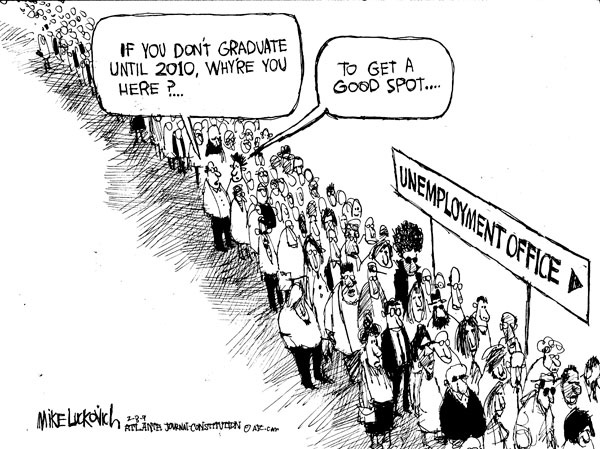
The list of industrial countries wishing to depreciate their currencies is not matched by a list of emerging economies happy to let their currencies appreciate significantly.
As a result, foreign exchange tensions are mounting, and the price of gold has been driven to a new record level.
This week will shed light on whether policymakers can do anything to deal with these two issues. If they continue to stumble and hesitate, what has been simmering may well come to a full boil in the next few months.
--------------------------------------------------------------------------------------------------------------------------
You may ask, “Who cares about these global economic issues?” The reason to be concerned is that the global economy has a very real impact on the U.S. economy, for good or for ill. The global community is now intertwined with each other in ways never before experienced. We’re all in it together.
Let’s hope that the power brokers, government bureaucrats and ivory tower economists know what they’re doing for the stakes are extremely high.
Wednesday, May 26, 2010
Much Ado About Fannie and Freddie
Doug Marshall, CCIM
Market Assessment
From time to time I quote a well-written article verbatim. This is one of those times.
I found this insightful article on the Globe St. com blog discussing what’s currently happening with Fannie Mae and Freddie Mac. It was written by Sule Aygoren Carranza who is the New York City-based editor of the Real Estate Forum and multifamily editor for GlobeSt.com.
_________________________________________________________________________________________________________________________________________________________

Introduced by Senate Republicans John McCain (AZ), Judd Gregg (NH) and Richard Shelby (AL), the amendment to the financial regulatory reform package would have taken the GSEs off of taxpayer support and mapped out a plan to wind down and dissolve them over 15 years.
Fannie Mae’s first-quarter loss came in at $11.5 billion, down from $15.2 billion in the final three months of 2009 and $23.2 billion in the first quarter. The losses were attributed to credit-related expenses and the impact of new accounting standards.
These losses resulted in a net worth deficit of $10.5 billion for Freddie and $8.4 billion for Fannie, for which the companies requested a combined $19 billion in additional funding from the Treasury in order to continue operations. If accepted, that would bring the GSEs’ total federal bailout to some $140 billion.
The good news for multifamily, though, is that the agencies’ losses were primarily on the single-family and guarantee segments of their business.
Another bright spot is that the delinquency rate for both firms. Freddie’s monthly delinquency rate fell for the first time in three years, to 4.13% in March (down from 4.2% in February) for single-family homes and 0.24% for multifamily, down one basis point from February.
Meanwhile, Fannie’s serious delinquency rate (that is, loans that were more than 90 days late) rose from 5.38% in the final quarter of 2009 to 5.47% in Q1. Although it registered an increase, Fannie officials said the figures show a slowing growth rate of delinquencies.
The improvement reflects the willingness of lenders to do workouts with borrowers, but with the continued weakness in the economy and the number of underwater mortgages out there growing, I don’t see how this could be a long-lasting trend.

On the other hand, it’s no question that financial support from both Fannie and Freddie is also the primary—if not sole—reason the housing market hasn’t completely imploded.
Source:
Much Ado About Fannie & Freddie, Globe St.com Blog by Sule Aygoren Carranza, May 14, 2010.
Monday, May 10, 2010
Greece: Standing Alone?
Doug Marshall, CCIM
Market Assessment
Published May 4, 2010
On the same day Portugal, too, had their bond rating reduced. A day later, Spain’s debt got classed lower, from AA+ to AA. Who’s next?
The critical question is whether the proposed bailout action being worked up now going to be sufficient to keep Greece out of default on its European Union obligations?
The approach to Greece seems to be attempting to redress two rather co-dependent issues: 1) how to keep the “contagion” from spreading, through a massive combined bailout effort and a drastic tightening of the Greek belt through austerity measures, and 2) how to infuse confidence in euro debt-holders around the world who have dropped European debt like they were holding hot coals.

It is being argued that expulsion from the EU is not a terrible or irresponsible idea, in that the contagion spreads no further and Greece learns a lesson over the next few years while it gets its collective house in order.
It’s clear that one whisper of default causes many debt-holders to run for the door. But people seem to question whether this situation should be seen as an emergency encompassing the entire EU, simply because EU confidence and influence create domino-like effects. Or should it be considered as Greece problem and spare the rest of the EU shares in its drama?

The euro has dropped to a new one year low compared when compared to the dollar and is continuing to fall in value. Since mid-2008 the euro has lost a whopping 16 percent of its value when compared to the dollar.
More importantly, from our view point as Americans, investors around the world are buying U.S. Treasuries, which is the typical “flight to quality” that occurs during times of crisis. This increase in demand of U.S. Treasuries has caused interest rates to drop significantly during the past few weeks.
The 10 year treasury was recently above 4.0% and at the time of this writing is now at 3.59%. This bodes well in the short run for our economic recovery as the crisis in Greece will keep our interest rates lower than they would otherwise be.
One thing is certain: comparisons are easy, but the reality is harsh. Barring a removal from the EU by the governing body, a numbing idea, Greece and other nations will have no choice but to issue more and more debt holdings in order to survive.
And who is buying those these days?
Sources:
David Oakley, Alan Beattie, Kerin Hope; “IMF Looks At Offering Greece More Cash”, FT.com April 27 2010
Jon Markman, “Let Greece Default On Its Debts”, MarketWatch.com April 28 2010
Nicholas Kulish, “Europe Looks To Aid Package As Spain’s Debt Rating Is Cut”, The New York Times April 28 2010

