I know that if I emphasize too strongly what is happening in Greece I will be accused of being another Chicken Little proclaiming that “the sky is falling.” But reality is that a default by Greece on its debt obligations will likely have a serious adverse impact on us in the United States. But before I explain why let me back up a bit and give you a brief overview of what’s going on.
The Greek sovereign debt crisis has grown to the point that it is no longer a question of if Greece will default on its debt it’s now only a matter of when. It’s going to happen. Last week Standard & Poors lowered the country’s debt rating to triple C – its worst rating for any country in the world. The Greek government is teetering on collapse as massive demonstrations express their rage and frustration in the streets.
A survey indicated that 85 percent of all Greeks would rather default on their country’s debt than institute the severe austerity measures that are being proposed for a temporary bailout. And make no mistake it is a temporary bailout. Barring an absolute miracle any bailout will only delay the inevitable. They have already tried “kicking the can down the road” too many times and at some point they will have to pay the piper.
There are three ways a default by Greece on their debt will affect us:
1. A small portion of their debt is borrowed from U.S. banks – $10 billion or about 5% of their total debt. It’s not pocket change but that amount is not a serious exposure to their debt. That can be absorbed by our banks.
2. However, U.S. banks through credit defaults swaps have indirect exposure to 56% of the total Greek debt. This represents $116 billion of the total $206 billion that Greece owes. That’s huge! Simply put, a credit default swap is default insurance. What has happened is European banks have lent money to Greece but insured their Greek loans with default insurance from U.S. banks.
So the big question is, which no one has an answer for, “Will the Greeks be able to restructure their debt (negotiate a lower interest rate, maybe a forgiveness on some of the debt, etc.) or will it be a complete default?” If it is a restructuring of debt (kind of a “soft landing”) the European banks will absorb the losses. It will not likely trigger the default insurance. If it is a complete default, then it is likely that the American banks’ credit default swaps will take the hit. And because most of those American banks who issued the credit default swaps are “too big to fail” guess who will be footing the bill?
3. As tight as credit has been over the past three years, it’s going to get even tighter if $100+ billion is taken out of U.S. banks to pay off the credit default swaps on the defaulting European bank loans to Greece. That money would better served lending to worthy businesses and individuals in the U.S. That’s the real killer concern.
Here’s my thinking on this situation:
1. Banks are hoarding cash. They are reluctant to lend to businesses, to consumers and on commercial real estate which would help get this economy going again. The potential default by Greece and others – Portugal, Ireland, and Italy are next in line – will only make matters worse if American banks are picking up the tab through credit default swaps.
2. Congress needs to enact legislation regarding credit default swaps that either bans this financial product or greatly reduces the American taxpayers’ risk if something goes horribly wrong.
3. Finally, it’s time to get tough on banks that make stupid investment decisions. The federal government should not have to provide bailout money to keep these banks solvent. Let them fail!
Sources: Time to Get Outraged, Thoughts from the Frontline by John Mauldin, June 10, 2011; Greek Debt Tsunami Could Reach U.S. Shores, MSNBC.com by John W. Schoen, June 16, 2011; Greek Crisis May Put California Bank in Play, The Street, by Dan Freed, June 16, 2011; Global Markets Shaken by Greek Debt Crisis, AlJazeera.net, June 16, 2011.
MCF Market Watch
Welcome!
In the interest of keeping our clientele educated and well-informed in a trying economy, MCF issues bi-weekly market assessments.
Go to our web site to subscribe to this and other news and tools, including the MCF Rate Sheet and Mortgage Solutions - Real Quotes On Real Deals (TM).
Follow us online!
Friday, June 17, 2011
Why a Greek Default is Important to Us

Tuesday, December 8, 2009
Light At The End Of The Tunnel
Doug Marshall, CCIM
Market Assessment
Published December 8, 2009
- The overall economy needs to improve
- Commercial real estate fundamentals (vacancy rates and rental rates) need to stabilize
- Foreclosures need to occur so banks can cleanse their balance sheets of non-performing assets
- Weaker banks need to fail
- Lenders need to extend, amend, and pretend
- Inflation needs to happen, and
- A new version of the CMBS product needs to be created.
Chart of the Day (shown below) is a product of Barron's Magazine, which provides insightful charts that both inform and educate the reader. Rarely can you find a chart which better illustrates how this recession compares to those experienced in the past.
 The chart compares the third quarter earnings of most companies that comprise the S&P 500 to other recessions that have occurred since 1936.
Notice the precipitous decline in corporate earnings since the third quarter of 2007. Earnings have been in freefall, having dropped 92% from the third quarter of 2007 to the third quarter 2009 trough, which makes it easily the largest decline on record.
 However, on the positive side, the S&P 500 combined earnings has bottomed out and is moving up sharply. Improved earnings are the first step to recovery; but as we all know, employment growth is the real indicator needed to show that a recession is over.
Unfortunately, we are not there yet. In Oregon and Washington, unemployment is expected to continue to rise through the second half of 2010.
But for now, we should realize that the U.S. economy is in the first stage of a recovery. It may be a slow and arduous recovery, but it appears we are in for better days ahead.
Have courage! There's light at the end of the tunnel.
Source: Barron's Magazine Chart Of The Day, November 20 2009
Wednesday, July 29, 2009
The Future Of CMBS - Is There One? Absolutely!
Market Assessment
Published July 28, 2009
 In our daily business of mortgage brokering and facilitating commercial real estate loans, we have been hampered by large holes in our lender list.
I’m constantly reminding borrowers that sectors of the lending market that would have aided them in past years are gone – just gone – and we don’t know if they’re coming back.
One of those lending sectors, lost to us at this time, is the CMBS (commercial mortgage-backed securities) market. Shoddy securitized lending practices have been one of the primary causes of the entire credit crisis.
Its lack of oversight, furious pace, and too aggressive underwriting criteria, has driven CMBS investors to lose all faith in the process. It is no longer an option for a sane, rational investor.
But what of the future? Does the CMBS market stand a chance of returning? Yes, unequivocally, says Adam Klingher of Johnson Capital. “Lending has gotten too big to do it the old way with banks and insurance companies taking in money and then lending it out the back door…”
 As long as the issuer can show they are really underwriting their loans and making “good investment decisions, the security investors will return,” says Klingher.
But how will it re-emerge with any credibility? That’s the real question. How will the CMBS market convince security investors that it has learned its lesson, so to speak, and can be trusted not to occasion a similar crash and crunch in future years? What changes to its customary ways will it have to make?
Correcting the present CMBS approach to financing commercial real estate will require a sharing of the financial risk between the issuer and the investor. “The huge bonuses Goldman Sachs will soon hand out shows that the financial industry high fliers are still operating under the system of heads they win, tails other people lose,” says Paul Krugman at the New York Times.
Under the present system if a bank generates big short-term profits by securitizing and selling their loans, they get lavishly rewarded – and they don’t have to give the money back even if the investors get bilked out of their life savings. That’s just plain wrong.
 As Adam Klingher puts it, there is a real need for the “economic interests of the banks or originators to align with the security investors.”
The issuer needs to leave “skin in the game” so investors know that the CMBS issuer will feel the financial pain just as much as the investor if something goes horribly wrong.
This is what it’s going to take to get the CMBS market back on the road to doing business with integrity.
Sources:
"CMBS Lending – Will it Ever Come Back?" July 14, 2009 by Adam Klinger of Johnson Capital
"The Joy Of Sachs," Paul Krugman at The New York Times, Oregonian article.
Monday, July 6, 2009
Coming Home To Roost
Doug Marshall
Market Assessment
Published July 6, 2009
The numbers are alarming… probably because they’re simply so huge. And for some reason, the conversation about this doesn’t seem to be happening.
While most attention in commercial real estate today is focused on the dramatic deterioration in term loan performance (i.e. defaulting loans), an even more troublesome issue is the extent to which loans originated during the 2005-2007 period will encounter significant problems, refinancing at maturity.
A report dated April 22nd, from the prestigious Deutsche Bank Securities research group, focused on this refinancing issue. Shown below is a chart showing the annual maturities of loans by lender classification. The conclusions drawn by Deutsch Bank Research are manifold, and are a great cause for unease:
· Commercial real estate prices have already plummeted 25-30% from their peak in 2007 due to the enormous changes in available financing terms (lower LTVs, higher interest rates, etc).
Further declines may be expected based purely on the degrading economy (which is resulting in higher vacancy and lower rental rates), pushing values down another 15-25%. · The decline in commercial real estate values in the 2005-2007 period will make it very difficult for many properties to refinance when their loans come due.
They predict that two thirds of the loans maturing between 2009 and 2018 ($410 billion) are unlikely to qualify for refinancing at maturity without significant equity infusions from borrowers.
· This group estimates that the equity deficiency that would have to be made up by borrowers themselves tops $100 billion.
Solutions that have been floated to solve this problem seem, at best, naïve. One idea that has been presented is that banks and other lending institutions facing this refinancing wave will simply agree to extend the maturity dates.
This incorrectly assumes that either: 1) the lender, by shortening the amortization of the loan, will sufficiently help accelerate the pay down of the loan; or that 2) extending the loan term provides the property time to achieve additional growth in value so the loan can qualify for refinancing.
With respect to the first possibility, the report concludes that the value deficiency for many loans is far too large to be tackled by simply accelerating the amortization over a reasonable time period. And with respect to value growth, the likelihood of significant property price appreciation is remote. It’s a gloomy forecast. We strongly encourage borrowers to determine whether any of their loans are currently “upside down.”
This can be determined simply by taking current interest rates, cap rates, and underwriting terms to calculate whether their new loan would qualify for refinancing at more or less than the existing loan amount.
If the new loan is less than the existing loan you’ve got a problem; and now is the time to start working on a solution, not when the loan is due.
If you or a client of yours would like help estimating a new loan for their property under today’s lending criteria we are ready to assist you. Please do not hesitate to contact us for a no-obligation loan estimate today.
Source:
Potential Refinancing Crisis in Commercial Real Estate, April 22, 2009, by Deutche Bank Securities, Inc.
Wednesday, June 3, 2009
The Last To Go – And The Next One Coming
Doug Marshall
Market Assessment
Published June 3, 2009
The housing crisis – the frozen credit tundra – the bipolar stock market… We’ve heard these bad tidings for over a year now, and more.
Commercial real estate has been one of the last sectors to feel the pinch, being relatively stable and containing a lower default rate… underpinned by easy credit already obtained.
This interactive map (rollover your county) is a great resource for seeing how the economy is currently doing; it also gives rise to questions as to how various areas in the country might be affected by this trend.
The fallout due to the bad economy is already being felt. Linens ‘N’ Things, Circuit City, and many more… these large corporations are in serious trouble – leaving storefronts behind, vacant as they close down, declaring bankruptcy, or going out of business altogether.
For apartments and industrial buildings, rates have increased more than 80 percent, according to Reis, Inc,” says the Associated Press.
The impact on the economy of the coming wave of bankruptcies is hard to gauge.
But some pundits heralding “slight rebounds” in current market trends should take an honest look at this long-range financial impact on commercial real estate.
It’s not over yet.
Source:
Alex Veiga, StarTribune.com
May 11, 2009
Thursday, May 28, 2009
No More Pie In My Sky
Market Assessment
Published May 27, 2009
 What do borrowers have to do get the financing that they require to survive the credit crisis? Ryan Krauch, writing for CIRE Magazine, is emphatic (and very right) on this point – borrowers are going to be forced to adjust their realities.
The good ol’ days are just that – OLD. They are gone; they’re over and done with and they’re not coming back… at least not in the short term. CMBS loans are a thing of the past, as are loan applications that contain questionable data on the borrower.
So a new manual has to be written for those poor souls in this predicament. And they’re not going to like it.
Borrowers’ Tips For Survival:
· Fundamentals Matter – Underwriting a loan is now going to require proof of real, sustainable business plans and exit strategies. Lenders will be tight with they’re requirements and disciplined with their processes.
· Operating Track Records Count – Padded pro formas that assume more than can be proven are a thing of the past. Real, tangible numbers that prove the value of the property will be required.
 · Borrowers Must Be Well-Capitalized – Nope, sorry, investors will need to put a lot more capital into a deal in order to get financing. “Significant equity” will be required of borrowers in order to obtain financing.
· Capital Costs More – There are borrowers out there who, because of the free-and-easy way in which they have acquired capital in the past, get downright belligerent when told that their new money is going to cost them more. It’s true, though; spreads will be higher, lenders will be hedging against risk, and pricing continues to climb.
The deals are still there to do. The money is around, though more difficult to find. And the work required to get it, as well as the burden now placed back on borrowers, to achieve it is substantial.
However, if this market is going to right itself again and become what it should – a disciplined and reasonable industry – the pain is going to have to precede the gain. Sorry…
Source:
Ryan Krauch, “Back To Basics”, CIRE Magazine's Financing Focus, May 15, 2009
Thursday, April 30, 2009
Playing For Time
Market Assessment
Published April 30, 2009
I hate being right these days.
In a previous post, I talked about a "different kind of boom" where maturing CRE mortgages ($814 billion worth) and the inability for many to find refinancing threaten the very fabric of the commercial real estate market.
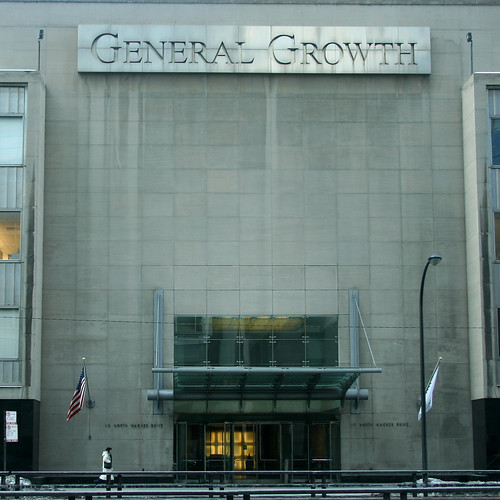 Now a large and prestigious corporation has unfortunately presented a very real example of this gloomy prediction.
U.S. mall owner General Growth Properties, founded in 1954 as a family business and now sporting total assets of $29.56 billion, has declared bankruptcy simply because they cannot find a lending source to refinance their properties.
Unfortunately the company also carries $27.29 billion in debt. While the company claims to have a good core business and seeks simply to gain time to reorganize, the crux of the problem lays in the lap of the credit markets.
General Growth has $15.17 billion in debt from securitized CMBS loans that have to be refinanced, somehow. They have been unable to secure that financing and are now, as the second-largest mall owner in the US, required to seek Chapter 11 protection from creditors in order to make the miracle happen that they’ve been seeking since November.
 According to Sam Chandan of Real Estate Economics, this is not going to be a unique case.
He states, “We will see a significant rise in delinquent and defaulted mortgages in commercial real estate above and beyond what we already experienced.”
The question then arises: with so few lending sources able to soak up $814 billion of CRE debt due to mature over the next few years, how many corporations of General Growth’s stature will suffer this fate?
And what will our world look like then?
Source:
Ilaina Jonas and Emily Chasan, Reuters
“General Growth Files For Bankruptcy Protection”, April 16, 2009
Wednesday, April 8, 2009
First Signs Of Economic Recovery
By Doug Marshall
Published April 8, 2009
Fear is rife and worry is rampant. The economy’s ills are affecting the mood and optimism of a world that’s been sent into a downward economic spiral.
Or so it seems on the street…
From an investor’s standpoint, however, there are some positive signs that recovery may be coming. Not today, not tomorrow, but soon and hopefully of an enduring nature.
Here are some indicators that bring hope:
· Banks are making money. With spreads over the cost of funds at recent historic highs, those lenders still lending are making huge premiums on their loans.
· Housing starts have surged. Having hit an all-time low in January of 2009, recent upward trends in housing and pending starts show a marked slowing in the pace of decline.
The bottom may still be a ways away, however, and a housing glut continues to plague home builders and developers.
· The stock market is up. Always a good thing, the stock market has continued to climb in recent weeks, with the Dow Industrials breaking 8000 last Thursday, for the first time in two months.
The news from the Commerce Department that factory and manufacturing orders were up, as well as the loosening of mark-to-market accounting standards on banks by the Financial Accounting Standards Board, fueled the rally.
· Retail sales are recovering. In weekly chain stores sales throughout the US, retailers have seen slight but positive increases in sales. Recent surveys conducted by ICSC and Johnson Redbook confirm that consumers are beginning to spend more.
· Not all are pessimistic. Dr. Mark Dotzour, who is the head economist from Texas AM University, spoke at the national TICA conference in San Diego last month. He said that he believes the data shows that this recession should be over by year end.
It’s interesting to consider that the average time needed to sell a house has gone from 11 to 6 months over the course of the past year.
Spring has sprung. And it’s to be hoped that the American investor reads all the news before panicking into error.
We’re on the way…
Source:
Rich Karlgaard, Digital Rules, "Twenty Reasons to Be Optimistic"
As printed in Forbes, April 13, 2009
Thursday, February 19, 2009
CNBC's "House Of Cards" Tumbles
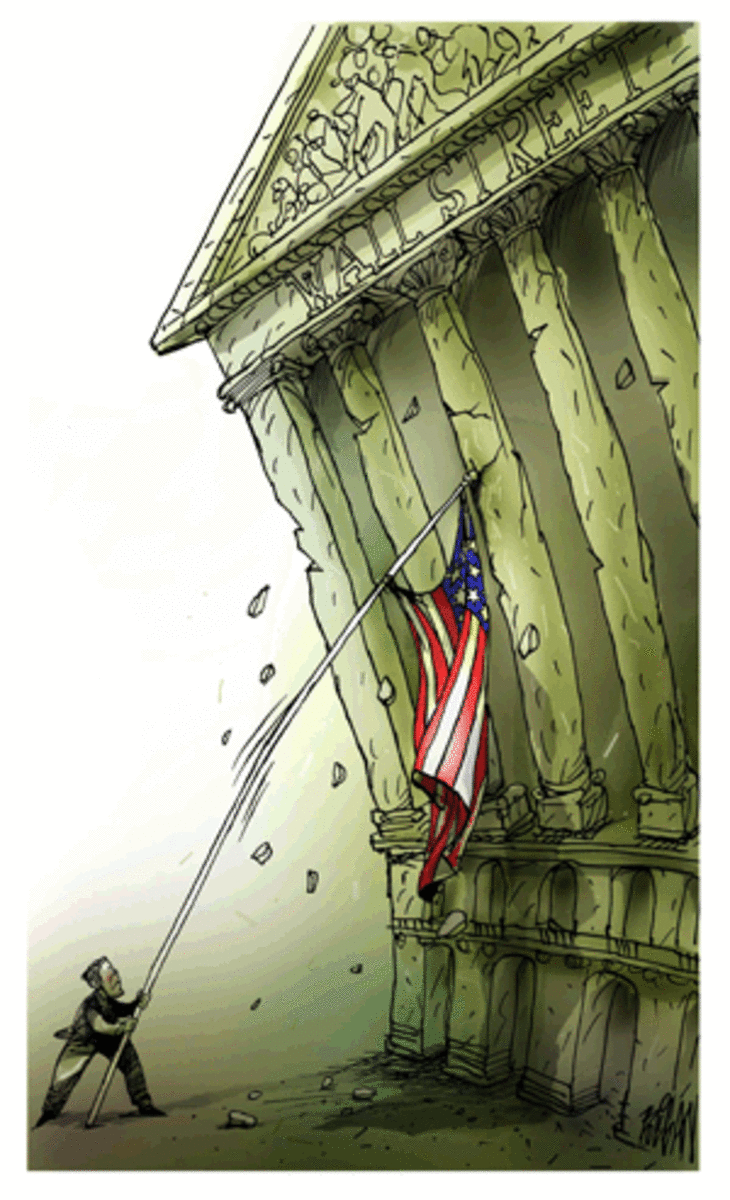 You don’t want to miss a very informative and well-produced documentary that is scheduled to air on February 25th at 5:00 p.m. and again on March 1st at 9:00 p.m., on CNBC, called House of Cards. (Check your CNBC TV listings, to make sure.)
In this piece, award-winning anchor/reporter David Faber takes the public into the back rooms of lending institutions and Wall Street firms that created, through unscrupulous and unprecedented loan-making and credit forgery, the economic collapse we’re now experiencing.
According to TV reporter Ray Richmond, this is a “balanced, clear-eyed approach to chronicle a tale of greed and deception unprecedented in American history.”
It has a horror-film feel to it and brings the demons of our descent into the light: the bait-and-switch tactics, the snake-oil salesmen, the blind denial of the “experts” all put on public display.
 Faber also conducts probing interviews of several people who had a hand in the making of sub-prime massed loans, creators of forged credit documents, and public officials who were unable to stop it all.
This is a maddening account of how the snowball became a ticking time bomb and why no one listened to the council of the wise about what was coming.
Watch this program, but have a glass of wine ready - maybe a whole bottle. Unfortunately it’s true that we need to absorb cautionary accounts like this for “those who cannot remember the past are condemned to repeat it.” George Santayana
Friday, January 23, 2009
2008 Market Recap
Doug Marshall, CCIM
2008 Market Recap
 Bear Stearns and Lehman Brothers, two near-Biblical names on Wall Street, are no more. Freddie Mac and Fannie Mae were seized by the U.S. government.
Merrill Lynch was absorbed by Bank of America, Wachovia was absorbed by Wells Fargo, and Washington Mutual by Morgan/Chase.
Goldman Sachs and Morgan Stanley are now bank holding companies. The housing industry imploded. Wall Street tanked, with investors losing $7 trillion from their investment portfolios. Okay, in the face of this financial Darwinism, what can we look forward to in 2009?
Predictions for 2009
Here are some predictions by various editors of national publications gathered by SourceMedia Publications, as it relates to banking and financial industries.
Regulation, Regulation, and More Regulation
 “Credit card practices, mortgage disclosure, suitability standards, loan modifications, executive compensation, ratings-agency status, overdraft guidelines, Basel II deadlines... There may be no area of financial services where rules don’t get tightened in the coming year.
And it won’t just be regulators leading the charge; leading members of the newly-elected Congress have made it clear that they’ll be pushing for change--either in tandem with agencies or with an eye to filling what they perceive as gaps in existing oversight…” (American Banker)
Housing
“The home price collapse that triggered the current financial crisis will bottom out in 2009, leading to a mortgage sector recovery in 2010. It is said that housing always leads the economy into recession and then back out of it…
 Real estate went into recession in 2006, followed by the mortgage industry in 2007, the national economy this year. It should be true on the back end as well. A further 10%-15% fall in home prices in overpriced states should establish a bottom that will bring fence-sitting buyers back into the market for homes.
If long-term rates stay low, the combination of refinances and purchased mortgages will act to bring the mortgage market out of its prolonged funk.” (National Mortgage News)
GSE Shake-down
“Fannie Mae and Freddie Mac will be merged in 2009, in advance of being divided into a number of mini-GSEs specializing in niches such as MBS, affordable housing, or portfolio holdings.
 While the two GSEs once had separate identities (Freddie Mac catered to thrifts, and was an MBS shop, while Fannie Mae specialized in mortgage banks, and acted as a giant savings and loan) they are now practically interchangeable, so there is no necessity to keep them as separate brands…
Merging them, and combining their assets into categories, makes sense as a preliminary step towards dissolving them into manageable smaller entities that will dilute the huge risks that caused the government to nationalize them.” (National Mortgage News)
Securitization
“It remains a bleak picture for ABS, with issuance expected to be focused on credit cards and autos, with a smattering of student loans…” (Asset Securitization Report)
So if these predictions are true, 2009 may not be a stellar year! Surprise, surprise.
As I’ve stated in other recent market assessments, our goal for 2009 should be to get through it and wait for better times to follow.
Monday, January 5, 2009
Wringing In The New Year

In the world of commercial real estate (CRE), however, and in the economy in general, a darker scene at the start of a new year has rarely been encountered.
Without getting maudlin, it's true that experts, economists, and CRE professionals are making the same declaration: let's just get through it and see who's left standing.
Even though CRE remains in "better shape than some other industries", with "good balance between supply and demand", "modest" vacancies and loan default rates that have "so far hovered at a rock-bottom 1 percent", banks are reluctant to lend out the cash they have been given by the Treasury Department.
And that's a bad thing, a very bad thing.
For example, in the European markets, banks have been provided massive injections of cash, assuring that there is enough in the system to begin moving the credit process forward.
However, instead of lending, the European banks are hording. They are routinely parking over 200 billion euros, overnight, with the Central European Bank.
This does not inject cash into the lending process, even between the banks themselves. Credit, therefore, remains scarce and very difficult to obtain.
In the world of CRE, the real concern right now is not with financing for new commercial real estate acquisitions. Those loans will get done, albeit with more conservative underwriting than in years past.
The real concern is with the refinancing of existing loans coming due this year. More than $1 trillion of both short-term and 10-year fixed rate CRE loans come due in 2009, each posing a different type of problem to hurdle.
What happens with these under-performing loans when they come due? Will banks play hardball, causing an avalanche of foreclosures? Or will they realize the need to tread lightly?
If lenders require borrowers to inject additional cash into their investments in order to secure new financing, many cash-strapped borrowers will end up defaulting on their loans.
In addition, loans that closed 10 years ago with lenders in the commercial mortgage-backed securities market (CMBS) will also be coming due this year.
Those lenders no longer exist. They have gone the way of all flesh. What lenders will be willing to step up to do the enormous amount of refinancing required just to maintain the status quo?
Despite massive bank bailouts by the Treasury Department, little seems to be exiting those banks for the benefit of real investors. This is why CRE groups have been meeting with Federal Reserve officials, Treasury workers, and their members of Congress, asking for relief from this impending problem.
It's not insignificant. And if what is predicted plays out, the effect on corporate America and the economy will be just as bad as any other industry that falters.
Sources:
Financial Week, Dec 29 LIBOR Rates Fall As Banks Tap Other Sources Of Funds
Erika Morphy, GlobeSt.com, Dec 23 CRE Clarifies Its Fed Request
Amy Cortese, The New York Times, Dec 28 A Wish List For Commercial Real Estate
Thursday, December 18, 2008
Teetering and Tottering
Market Assessment
Published December 18, 2008
 While brokers watch commercial lending sources dry up and investors and consumers sweat over their IRA’s and 401(k)’s, concern over one’s personal welfare can sometimes cause us to lose perspective on the depth of the credit and liquidity crisis affecting the nation.
It’s amazing to consider just how big this one-time credit crunch, now a near-depression, has affected things – things like the American banking community.
The 24th and 25th banks to fail in 2008 recently gave up the ghost. Haven Trust Bank of Duluth, Georgia, and Sanderson State Bank, in Texas, both got bought out by local rivals according to the FDIC.
The opportunity presented for the strong financial institutions to buy out the weak ones seems to be irresistible – from big powerhouse institutions to small boutique investment firms, banks sit and drool over weakened rivals that can bolster their portfolios and positions.
In considering that 25 banks have failed during the year, compared to just 3 bank failures in 2007, it’s plain that the entire financial and banking institution is reeling, tottering around and trying to maintain its own balance, like a woman with most of the glue gone from one high heel.
And when the FDIC itself doubles the premiums paid into the system by banks and considers tapping Treasury for short-term cash to ease its own cash flow – it says that we all had better hang on by our fingernails.
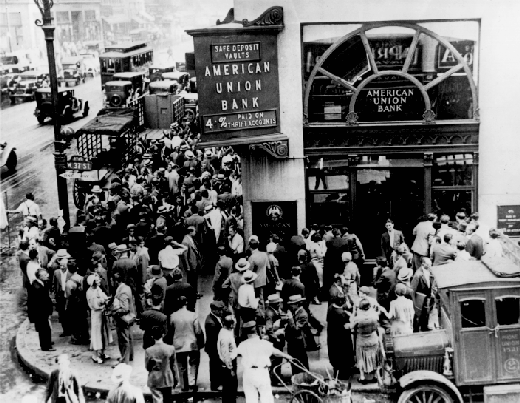 The FDIC, insurer’s insurer, was created by Congress in 1933 expressly for this purpose, to reestablish confidence in the banking industry. Since then, it has covered the failures of 2200 depository institutions and brags that “no depositor has lost even a penny of insured funds.”
The FDIC even felt called upon to issue a statement to that effect; basically a “you can count on us” speech that seeks to assure investors and depositors that it will be there no matter how many banks hit the floor.
But those of us living in the world of financing and lender/investor relations have to wonder where we’ll be in a year’s time. For most of us, our goal for 2009 should be to just get through it as best we can and not necessarily to get on top of it.
Sources:
Financial Week/Reuters, Dec 13, 2008 – Two More Banks Bite The Dust
Financial Week/Reuters, Aug 27, 2008 – FDIC May Hit Up Treasury For A Little Pin Money
Bloomberg News, Oct 8, 2008 – FDIC Will Double Premiums To Boost Insurance Fund
FDIC Press Release, Dec 10, 2008 – FDIC Reiterates the Guarantee of Federal Deposit Insurance
Tim Catts for Financial Week, Dec 15, 2008 – Big Battle Shaping Up For Smaller I-Banks
Friday, December 12, 2008
Say Good-Bye To LandAmerica
 Fidelity National Financial.
The announcement, made Wednesday of last week, marked yet another tremendous loss to the mortgage crisis, on a national level.
Having already lost its subsidiary LandAmerica 1031 Exchange Services, Inc, to bankruptcy earlier this week, the Richmond-based corporation decided to sell its two largest and most profitable subsidiaries, Lawyers Title Corp and Commonwealth Land Title Insurance Co.
LandAmerica had a merger deal on the table with Fidelity National as recently as November 7. Fidelity National, however, backed out of that deal within two weeks of its announcement, apparently after assessing LandAmerica’s financial condition.
 LandAmerica recorded $2.8 billion in debt September 30.
Instead of assuming such debt, Fidelity National retreated and then returned to pick up the ailing insurance giant’s underwriting subsidiaries which constitute 90% of LandAmerica’s profitability.
There wasn’t much choice for LandAmerica. Trading for the company stock on the New York Stock Exchange had been suspended, since it had sunk to $.20 per share.
LandAmerica’s worth, as recently as last summer, was $1.6 billion. However, as many other companies in this industry and economic climate are discovering, the mortgage squeeze is sapping credit and savings as few other downturns have.
For those with large investitures in real estate-minded affairs, it’s going to be difficult to retrench far enough to save their limbs.
Sources:
Joseph A Giannone, Reuters, “LandAmerica Files For Bankruptcy, Sells Businesses”, Nov 26, 2008
Paul Jackson, NuWire Investor, “LandAmerica Declares Bankruptcy”, Nov 26, 2008
Richmond Times-Dispatch, “LandAmerica Files For Bankruptcy”, Nov 26, 2008
Friday, December 5, 2008
Deflation: Friend or Foe?
Market Assessment
December 5, 2008
 It’s hard to keep up with the news in this market. Not more than a couple of months ago, we were all worried about runaway inflation with oil prices leading the way. What a difference a few months make.
Now, the worry is deflation. Deflation is a period of falling overall prices. Prices can drop in order to reflect an adjustment in the market. It’s perfectly natural at times, and wonderful. However, if prices drop for extended periods of time, it hurts the economy rather than helps.
Here’s an example: you are in the market to buy a new home, but do you want to be the person who takes out a mortgage on a home that may likely be worth less in six months? Assume for moment that you want to put 10% down and finance the balance. If the price of the house you purchased continues to fall what happens to your equity? It eventually goes to zero and at some point the loan balance may exceed the value of your home.
So instead of buying a home, you wait. Consumers and investors delay buying since they expect further price drops.
Banks, borrowers, and businesses all stand to lose from such a situation, causing more economic turmoil for the average citizen as well as the capital markets. During the Great Depression, 10% deflation per year contributed to a huge lack of demand. Farmers found it impossible, also, to keep up with mortgage payments, due to the falling prices of agricultural products. (1)
How real is this worry? Here are some statistics from October alone that have economists’ brows furrowed (2):
> The consumer price index dropped an unexpectedly large 1%, including an 8.6% plunge in energy prices. The core index (excluding energy and food) fell 0.1%, the first drop in the index since 1982.
> The producer price index, measuring wholesale prices, reports that the index fell 2.8% in October, including 12.8% in energy prices. This is the largest decline in the PPI in the report’s 61-year history.
Another example of deflation of most concern to the real estate profession is the yields on treasuries. Yields have fallen on the 2-, 10-, and 30-year bonds to some of the lowest levels since the Federal Reserve began keeping records in 1962.
This is a sign of frozen credit (3), where lenders would rather invest in low yielding treasury bonds rather than lending to other lending institutions or borrowers where the risk of default is unknown.
All in all, a deflationary period of any sustained length of time would hurt everyone. Let’s just hope that the market proves more resilient than to follow this inevitable path to destruction.
1 John W. Schoen, “Falling Prices Raise Worries About Deflation” (MSNBC.com Eye On The Economy)
2 Ben Steverman, “Deflation: What Investors Need To Know” (BusinessWeek)
3 David Goldman, “Treasurys: The Pressure Eases A Little” (CNNMoney.com)
Monday, September 8, 2008
Fannie/Freddie Taken Over By Treasury Department
Doug Marshall
Market Assessment
Published September 8, 2008
The other foot has finally dropped. What many experts were expecting to happen has happened quietly over the weekend. The two lending giants, Fannie Mae & Freddie Mac, are being taken 
This move by Treasury represents the most significant intervention by the government in the financial industry since the housing bust touched off turmoil in the credit markets a little more than a year ago.
As many have said in recent months, Fannie & Freddie are too large and too important to the credit markets to let them go down in flames. Intervention was the only real option unless of course you wanted to risk the very real potential of an economic meltdown.
The move by Treasury was precipitated by the steady rise in U.S. home mortgages that were either overdue or in foreclosure.
The latest survey by the Mortgage Bankers Association indicated that over 9% of all home mortgages in the country were at least a month overdue. That is up from 6.5% a year earlier and is the highest since the MBA began such a survey 39 years ago.
Fannie and Freddie guarantee more than $5 trillion in mortgages and have incurred combined losses of about $14 billion over the past four quarters. As loans continue to default, Fannie and Freddie losses continue to mount requiring more capital infusions to stay solvent.
A quick search on the internet did not uncover any clues on what Treasury will do with the comparatively highly successful apartment lending programs.
In related news, Kerry Killinger the chief executive officer of Washington Mutual was ousted today. WaMu’s stock price, already at a precipitously low price, plummeted another 12% as the news was announced of Killinger’s firing.
We aren’t through the crisis yet. Stay tuned.
Sources:
Frank Confirms Treasury Intervention To Shore Up Fannie Mae, Freddie Mac
by Deborah Solomon and Damian Paletta, The Wall Street Journal
Foreclosures, Overdue Mortgages Increase Again by James Hagerty, The Wall Street Journal
Wednesday, July 9, 2008
Securitization Made Insecure
Doug Marshall
Market Assessment
Published July 9, 2008
In assessing America’s current credit crunch and the past year’s near-collapse of markets, an important observation has been made by San Francisco Federal Reserve Bank president, Janet Yellen.
It was the securitization and distribution of bundled mortgage-backed assets that was the “key driver” of our hyper-inflated real estate market, argues Yellen.
Loan originators, says Yellen, with no motivation to do 
In the market that we had, where money was loaned almost without looking, there were several key culprits and factors that contributed to this over-securitization and caused a leveraging of our bank system that, Yellen declares, probably won’t stabilize for at least another year.
- The market’s rapid and insatiable need for mortgage-backed securities left loan originators with no reason or responsibility for properly vetting the bundles that they sold. They weren’t morally aligned or held responsible for the quality of those loans.
- Risk management in assessing credit and liquidity was left behind. Institutions and investors, even large ones, who were doing the buying of these bundles relied so heavily on flawed “rankings” of the products that they neglected to carry out their own independent assessments on what they were buying.
- Finally, the re-intermediation and deleveraging process, the attempt to come to rely less on debt and more on equity, is probably going to continue for a while until commercial banks, who are less heavily regulated able and therefore able to shoulder this burden, appear healthier.
While Yellen expects the deleveraging process and recovery to continue well into 2009, she can see things getting worse before they get better. Banks must continue to find, and use more wisely, new equity capital. And the balance of losses and growth must continue, especially in larger institutions, to stabilize.
It’s like choosing the treadmill over the buffet. It takes a while to return to your ideal weight, and it comes down to making choices every day that mean a healthier financial institution and venture, and continuing to maintain those wiser decisions as a matter of policy.
Source:
Janet Yellen On Risks And Prospects For The U.S. Economy, Econobrowser, July 7, 2008
Friday, June 20, 2008
Credit Crunch: On To Recovery?
Jennifer Sinclair
Summary of Market Information
June 12, 2008
While some economists alternately warn of, and plead for, rising interest rates and many bank lenders seem to be retrenching and retreating from financing, the chief investment officer of one of the largest fund managers in the world, BlackRock, thinks that the worst of the credit crunch has passed.
However, in saying that “we’ve seen the worst of it in terms of crisis”, BlackRock Vice-Chairman Bob Doll admits that recovery will be slow, taking another two to four years to correct.
“There is still more to come,” said Mr Doll in Singapore recently, confessing that recovery from the bank-stability standpoint will be slow and other crises in credit card loan markets and auto loan markets, may slow growth even further.
The Federal Reserve is the hero, according to Mr Doll, with the bailout and provision for failing banks like Bear Stearns, ailing Washington Mutual (down 9.3% ), and pressurized Lehman Brothers (down 13.6%). “The point is policy-makers make bold, creative moves when the pressure is on…”, said Mr Doll, emphasizing the need for such measure to maintain the U.S. bank system.
While Mr Doll feels that the U.S. faces simple slower-than-normal economic growth, he admits that should gas prices and commodities prices continue to rise as they have, a full-blown American recession is likely.
Whether due to the end of a period of expansion or the beginning of 1970s-style stagflation, these indicators seem to be the ones to watch in assessing the future of the American economy.
Sources:
Financial Week, June 9, 2008
MSN Money, June 11, 2008

Federal Reserve Credit Survey Results – Not Pretty
Doug Marshall
Market Assessment
Published May 21, 2008
In a survey taken quarterly by the Federal Reserve, some hard numbers get put to the trends seen in banks and their credit requirements for real estate funding.
A net tightening/loosening figure was placed on each sector and their lenders, reflecting an net tightening of credit by banks looking at loan requests, across markets.
The survey, titled “Senior Loan Officer Opinion Survey on Bank Lending Practices” for the second quarter of 2008, found that:
► A net 55.4% of lenders have tightened their standards on commercial and industrial loans to mid- and large-sized customers. At this time last year, banks were easing these requirements.
► On commercial real estate, a net 78.6% of lenders also tightened their standards. The first quarter of 2008 had the highest net increase in history; the second quarter, on which this number is based, comes in right behind.
► Residential mortgage numbers are even worse: 77.5% of lenders have tightened their standards in the sub-prime market. And even in the prime mortgage markets, 62.3% of lenders have tightened up. This is the highest increase, by a long shot, that the Fed has ever found in this sector.
The story told by these numbers is that lenders, who have been generous but not terribly discriminating in the past few years, are getting stingy with consumer, corporate, and commercial real estate funding. And in the consumer credit arena, even though demand has improved, supply just isn’t there.

Surging Credit Card Borrowing and Scary Implications
Jennifer Sinclair
Summary of Market Information
May 8, 2008
In a recent report on credit borrowing, it was found that consumer borrowing for auto loans, credit cards, and other non-real estate transactions has shot through the roof, by $15.3 billion.
The anticipated growth of credit borrowing by economists was $6 billion, so this comes as a surprise. This much borrowing, in a healthy economy, would signal a strong consumer increase in spending and more economic growth over time. But as we all know, this is not a health economy.
So what does this number mean? It means that consumers who are accustomed to taking out home equity loans and lines of credit, using them for vacations, boats, and other fun stuff, aren’t getting that money anymore. Banks aren’t willing to lend past equity and therefore have pulled the plug.
Instead, credit cards and other borrowings, for even day-to-day transactions have skyrocketed. Surging food and energy prices have forced consumers to rely on credit instead of ready cash. And this will weaken an already stumbling economy if allowed to persist.
Source:
Mike Larson, www.moneyandmarkets.com, May 8, 2008