John Mitchell, a well
respected economist, gave his economic update at the annual HFO Investor
Roundtable event January 8th.
It was another excellent presentation by Mr. Mitchell who has the
uncanny ability of making economic forecasting interesting.
To summarize Mr.
Mitchell’s economic forecast, he believes we will continue to see an improving
economy, albeit at a slow growth rate of about 2.0% annually. Certainly this is nothing to be excited about
but it’s far better than falling into recession.
What I would like to
focus my attention on today are Mr. Mitchell’s comments about where interest
rates are heading over the foreseeable future.
So let’s first discuss what The Federal Reserve has been doing recently and
then discuss what policies they intend to adopt going forward.
·
From the standpoint of monetary policy, The
Federal Reserve cannot push interest rates down any further. Short term rates are near zero and they can’t
go any lower than that.
·
The end of last month, The Fed’s Operation Twist
was terminated. This program manipulated
the market by selling short term treasuries and purchasing long term treasuries
which has resulted in driving down long term interest rates.
·
The Fed recently announced QE4. Recall that quantitative easing is an
unconventional monetary policy of buying financial assets from banks and
private institutions thus injecting a quantity of money back into the economy
for the purpose of stimulating economic activity.
Now let’s see what The
Federal Reserve plans to do going forward.
QE4, as it is being implemented this time around, has two components: 1)
the purchase of $45 billion of U.S. Treasuries a month with maturities in the 4
to 30 year range; and 2) the purchase of $40 billion a month of mortgage back
securities. Both types of purchases will
keep long term interest rates artificially low.
The Federal Reserve
announced in December that they plan to keep interest rates exceptionally low
as long as unemployment remains above 6.5% and inflation is no more than
2.5%. Currently, the U.S. unemployment
rate is 7.7%. The buying of securities by
The Fed is open ended until these two benchmarks are achieved.
So the big question is:
Do you think that the unemployment rate will decline significantly in 2013 or that
there will be a jump in inflation this year in order for QE4 to be
discontinued? Not very likely is
it? As much as I would like to see
unemployment fall below 6.5%, at the present pace of the economy we are likely two
to four years away from that happening.
Mr. Mitchell then posed a
very troubling question to the audience: How will The Federal Reserve unwind
QE4? The Fed currently owns about $3
trillion in securities. By the end of
the year that number will be about $4 trillion.
Discontinuing QE4 will result in a significant “pop” in interest rates
and selling the $4 trillion they currently own will further cause interest
rates to rise. Long term this looks like
a gigantic problem with no easy solution.
But back to the original
question: Where can we anticipate interest rates to go this year? It all depends on our economy. There are two likely scenarios.
1.
If the economy continues at the current pace,
then interest rates should stay where they are.
2.
If the world economy begins to slow down at the
end of this year due to the current recession in Europe and the economic slowdowns
of other countries such as China, Japan and Brazil, then our economy will begin
to slow down too. If the U.S. economy
were to show signs of a recession I believe The Federal Reserve will double
down on its efforts to keep the economy going.
If true they would buy more securities which means interest rates would
go down even lower than they are today.
I believe there
is no chance that rates will go up this year as long as QE4 is being
implemented. In fact I will go out on a
limb and say I believe the second scenario is the more likely. If true, then interest rates a year from now
will be lower than they are today.
Either
scenario bodes well for commercial real estate.
Keeping interest rates low will continue the current trend of rising
real estate values in the Pacific Northwest.
MCF Market Watch
Welcome!
In the interest of keeping our clientele educated and well-informed in a trying economy, MCF issues bi-weekly market assessments.
Go to our web site to subscribe to this and other news and tools, including the MCF Rate Sheet and Mortgage Solutions - Real Quotes On Real Deals (TM).
Follow us online!
Saturday, January 19, 2013
John Mitchell’s Interest Rate Forecast

Sunday, November 4, 2012
The 800 lb Gorilla in the Room
Whether Obama or Romney gets elected tonight, the next administration within the next four years will have two major crises that they will have to confront head on. One has been discussed frequently on the campaign trail – Iran getting a nuclear weapon, the other has been virtually ignored. It's the 800 lb gorilla in the room. We would prefer not to acknowledge that it even exists, which is, the inevitable financial collapse of Europe.
What most people don’t realize, or are unwilling to admit, there is no solution to the sovereign debt crisis in Europe. European leaders could assemble the brightest economist minds from all around the world together in one room, give them complete authority to act on the crisis as they see fit and it still would not change the ultimate outcome: Europe is going down. It’s inevitable. They are too far down the path to their own destruction to turn it around.
It’s only a matter of when, not if. True, they’ve done an excellent job “kicking the can down the road” these past three years and can continue to do so for some time to come but at some point the market is going to perceive their feeble attempts at a solution as putting a band aid on a gaping wound. When that occurs, market confidence will collapse taking down the European bond market and many of the European banks.
By now I suspect that many of you consider me a “nut job,” a “doom and gloom” type who thinks the world is coming to an end which I categorically deny. Humor me for a moment and for the sake of argument let’s assume my prediction is true. What then? How will this affect commercial real estate in the Pacific Northwest? To answer that question the following questions need to be answered:
- How will this affect trade with our largest trading partner, the European Union? We will see a substantial decline in our exports to Europe.
- How will this affect the U.S. economy? This will likely throw our economy into another recession.
- How will this affect our stock market? The stock market is affected by emotion. When things are good it soars far beyond any justification. When things are bad it plummets far lower than it should. In this case the stock market will initially plummet similar to what happened in 2008, maybe worse. At best it will be a roller coaster of a ride, soaring to new heights on good news and plummeting back down with any hiccup in economic news. This will not be a good time to be heavily invested in the stock market.
- How will this affect our bond market? It’s likely that Europeans will see our bond market as a safe haven and heavily invest in U.S. treasuries. If true, treasury yields, which are at historic lows, will likely go lower.
- How will this affect our financial institutions? This is where it gets ominous. The vast majority of our lending institutions should be unaffected. Only our five largest banks – Bank of America, JP Morgan Chase, Goldman Sachs, Citigroup and Morgan Stanley are heavily invested in credit default swaps on European sovereign debt. A credit default swap is a fancy term for bond insurance. Our five largest banks have insured a boat load of European sovereign bonds. When these European countries default on their bonds, these U.S. banks will be left holding the bag. Though these banks have confidently stated they have it under control, call me a cynic but I don’t believe them. Between you and me, I hope they do. I truly hope they do because the alternative is these banks are going down.
- What response will the president (Obama or Romney) make to minimize the fallout on the American economy? This is where it gets interesting. The president has a very difficult decision to make: Does he let these five largest U.S. financial institutions go bankrupt? Or does he bail them out? Is the country in the mood to bail Wall Street out once again? Are these banks too big to fail? If he doesn’t bail them out will it not bring down the rest of the world’s financial system? Good luck Mr. President!
- So back to the original question: How will this affect commercial real estate in the Pacific Northwest? I think this can best be answered by looking back to the 2008 financial debacle. Four years ago some commercial real estate investors survived while others did not. The common denominator for survival was:
- Property type mattered. Apartments fared well. Office, raw land and single family subdivisions did poorly. Everything else was in between.
- Those properties that were modestly leveraged survived. Those that weren’t were taken over by the lender.
- Those who have subsequently locked in long-term, low interest rate financing were the big winners.
So am I a “nut job?” You decide.
Saturday, September 29, 2012
QE3 - To Infinity and Beyond!
The
recent news from The Federal Reserve reminds me of a saying by Buzz Lightyear.
You remember ol' Buzz, the toy astronaut, in the movie series Toy Story. Every
time he lept from a piece of furniture, he would proclaim with great
fanfare, "To infinity and beyond!!"
Tuesday, August 14, 2012
Why Inflation Is Just Around the Corner
Thirty years have passed since we’ve had a significant
bout of inflation in this country. At
the peak of this inflation battle my money market account earned 21 percent
interest! That was the good side of
inflation. The bad side of inflation was
banks pretty much stopped lending and the only lending getting done was seller
financed or other creative forms of hard money lending.
For the past 30 years we’ve seen interest rates slowly
decline on commercial real estate from 12 percent to now 4 percent or less. I believe the days of ever lower interest
rates are coming to an end. In fact, I
believe the days of double digit inflation is inevitable and I believe it’s
just around the corner.
But before I go further on what I believe is in store
for us as a nation, let’s review what inflation is and what causes it.
What
is inflation?
Inflation is an increase in the price of goods and
services not due to growing demand or shrinking supply for those goods and
services (which also affects price) but due instead to the dollar losing its
buying power.
There is a difference between real price increases and
inflation. The price of oil could be
going up because we are running out of easy-to-find oil, or demand has gone up
because China’s rapidly growing economy is demanding more oil. That’s not inflation; that’s a real price
increase due to the forces of supply and demand.
What is causing the money supply to expand so rapidly?
Good question. The truth is no one knows when it will begin in earnest. The authors of Aftershock: Protect Yourself and Profit in the Next Global Financial Meltdown believe that significant inflation will begin in the 2013-2015 range.
What does this mean for commercial real estate?
Wednesday, July 6, 2011
Fed Scorecard: Where QE Worked and Where It Failed
Quantitative Easing, which ended last Thursday, has had its successes and failures. But before we look at the outcomes of QE let's quickly review what it is.
The term Quantitative Easing (QE) describes a form of monetary policy used by The Federal Reserve to increase the supply of money in an economy where interest rates are at or close to zero. The Fed does this by first crediting its own account with money it has created ex nihilo ("out of nothing") or some would say, by "printing money." It then purchases financial assets, including government bonds, from banks and other financial institutions. The purchases give banks the excess reserves required for them to create new money. The increase in the money supply thus stimulates the economy. That's the theory at least. Let's see how well it worked.
Where it Worked
- The stock market benefitted. Since last August when Fed Chairman Ben Bernanke announced QE2 the major stock indexes have increased between 20 to 29 percent.
- Commodity prices climbed. When a currency is debased, it takes more dollars to buy the same product. Commodities such as oil, precious metals, farm products, etc have benefitted.
- U.S. exports rose. Cheap dollars when compared to other world currencies makes our exports that much cheaper, increasing the demand for our exports.
- It reduced our chances for deflation. By pumping enough liquidity into the markets we have for the time being avoided the harmful effects of deflation (far worse than inflation).
- It created a "Wealth Effect" for some. If you invested in the stock market, or commodities during this time chances are you did quite well.
- Housing is broken. Bernanke assumed that lower mortgage rates would have a positive influence on the housing market. That has not happened.
- Jobs market is broken too. QE2 was supposed to spur spending, which would increase demand resulting in more jobs. This hasn't happened.
- Inflation may not be temporary. Bernanke called food and energy prices "transitory" and will likely reverse. This doesn't appear to be happening. Inflation is currently 3.6% and trending upward.
- Dollar's potential destruction. There is a fine line, which may have been crossed, between stimulating the economy with cheaper dollars and ruining the currency. This is my greatest concern.
- Interest rates will eventually go higher. They have to. Rates are unnaturally low. If the U.S. continues to borrow debt at the current pace, who will buy it once The Fed is no longer purchasing it? In order to get sell our debt, rates will have to rise, maybe dramatically in order to attract a new buyer.
So where do we go from here? What other means will be employed to get our economy going again? Is there anything that can be done? From my perspective, neither political party has had the political will to outline a realistic plan to get our economy moving in the right direction. Leadership is the key but no one has yet to act like a statesmen instead of just another politician pointing fingers. No one has yet shown a willingness to yield a little on one of their pet positions in order to achieve a benefit for the greater good. Until that happens we will have more of the same.
Sources: Yahoo.com, CNBC, Fed Scorecard: Five Ways QE2 Worked-And Where It Failed, June 30, 2011; Quantitative Easing by Wikipedia.
Tuesday, April 12, 2011
What Impact Will Inflation Have on Commercial Real Estate?
- The Producer Price Index (PPI), which measures average changes in prices received by domestic producers for their output, is up 5.6% for the twelve months ending February 2011.
- Commodity prices are rising in relation to the dollar. The price of gold hit an all time high earlier this week before settling down a bit. Silver prices continue to soar hitting a 31 year high. So far this year silver has gained 33% in value.
- A recent Deloitte Consulting poll indicated that 74% of those polled believe their spending will slow due to rising prices they are currently experiencing.
In the long run, modest inflation would be a great benefit to commercial real estate, as long as it happens gradually so that the market can make the necessary adjustments along the way. Real estate over the long run has been an excellent inflation hedge and it should be the same this time around too. Over time, with modest inflation those commercial real estate investors who are currently upside down on their investment portfolio could gradually become whole again.
My greatest fear is what happens in June when the Federal Reserve ends its own bond purchase program known as quantitative easing. Who will fill the gap in buying U.S. Treasuries? If no one steps in to the fill the void what will happen to interest rates? Doesn't the law of supply and demand require that interest rates have to increase? And more importantly how quickly will they rise and how dramatically?
Those are the questions that are currently being debated. Surprisingly there is no clear consensus among the pundits. We'll have to watch and see. Stay tuned. It's going to be fascinating to watch!
Sources: PIMCO bets against U.S. government debt, Reuters, April 11, 2011; Don't Believe the Inflation Fear-Mongers, The Mark, April 12, 2011; Inflation Not a Threat? Most Consumers Aren't So Sure; CNBC.com, April 12, 2011; Gold Price Sinks After Hitting Ne High at $1,478, Gold Alert, April 11, 2011; Producer Price Indexes - February 2011, Bureau of Labor Statistics, March 16, 2011.
Thursday, December 16, 2010
What’s Going On With Interest Rates?
by Doug Marshall, CCIM
Market Assessment
Over the past 60 days, the yields on 10-year Treasury notes have increased from 2.41% on October 8th to 3.53% as of December 15th, an increase of 1.12%.
What's going on?
All of the marketable Treasury securities are very liquid and are heavily traded on the secondary market. The treasury yield expresses the relationship between the face value of the security and the amount of return the investor receives.
If there are more investors selling bonds then those who are buying bonds, the value of the bond declines (the law of supply and demand). A reduced price on the bond results in an increase in the yield or return on the bond.
So the $64,000 question is, “Why are bond holders selling off their bonds?” I have surfed the web for an answer to this question and unfortunately there is no agreement among the experts.
Depending on who you like to read there are a variety of answers. But being fearless and little bit stupid I am going to give you my opinion (take it for what it’s worth).
But before I give you my assessment of the situation let me muddy the waters a bit with some conflicting information.
And with more Quantitative Easing 2 purchases on the horizon it is highly probable that this lead will be greatly extended.
At the very same time, the debt crisis in Europe with what has happened in Greece and Ireland is continuing. Adding to the problem, on Tuesday Moody’s downgraded Spain’s sovereign debt causing further turmoil in the bond market. There is a very real debt crisis going on in Europe which is resulting in European investors transferring their wealth into (you guessed it) U.S. treasuries.
Why are they running scared? There are two reasons that I think make the most sense
- The Fed’s policy of QE2 is not working as planned. The printing of money by the U.S. Treasury and the purchase of these bonds by The Fed is perceived by the holders of bonds to be inflationary which makes their modest fixed yields less desirable if inflation is going to come roaring back
- The other issue spooking bondholders that’s surfaced recently is the possible agreement by the Obama administration and Congress about extending the Bush era tax rates for another two years.
The compromise between the White House and Republicans included extending employment benefits for another 13 months which combined with extending the existing tax rates will increase the national debt by another trillion dollars. This means the U.S. Treasury will need to issue more bonds to cover the debt.
That being said, I believe that Ben Bernanke will do everything in his power to calm the bond market. What tricks he still has in his bag is anyone’s guess but he will do whatever he can to avoid runaway inflation.
Stay tuned. It’s beginning to get interesting.
Sources:
Fed Surpasses China in Treasury Binge, The Street by Eric Rosenbaum, December 15, 2010;
United States Treasury Securities, Wikipedia;
Bond Prices Fall Sharply after Federal Reserve Says It Will Continue to Boost Economy, The Associated Press, December 14, 2010.
Thursday, September 23, 2010
Global Economic Issues Raise Their Ugly Head
Doug Marshall, CCIM
Market Assessment
 I thought you would find the following article from Pacific Investment Management Company’s Chairman, Mohamed A. El-Erian interesting and informative.
This article was originally published on ftalphaville.ft.com on September 19, 2010. PIMCO is an investment company that manages the Total Return fund, the world’s largest mutual fund.
Shown below are Mr. El-Erian’s thoughts about two very important global economic issues.
--------------------------------------------------------------------------------------------
This coming week will be an interesting one. I am not just thinking of Tuesday’s FOMC meeting in Washington that will shed light on whether the Federal Reserve revises down its economic growth projections (it should and, I suspect, will) and expands non-conventional policies (it will, but probably not at this meeting).
I am also thinking of two other issues which were left to simmer quietly over the last few months when most of the focus was on America’s "recovery summer" — or, to be more exact, the lack thereof.
Last week’s catalyst was Ireland where banking issues are a serious worry. But the underlying problems are deeper and more complex.
Market measures of risk for peripheral European countries (Greece, Ireland, Portugal and Spain) are at or near danger levels… despite exceptional support from the European Central Bank, the European Union and the International Monetary Fund, and despite the implementation of adjustment measures on the part of some.
The failure to reduce risk spreads means that the public sector bailout is not working. Rather than provide assurances of better times ahead and, thus, encourage new investments, ECB/EU/IMF support funding is being used by existing investors to exit their exposures to the most vulnerable peripheral European countries.

The second issue is even more complex. It pertains to the global configuration of currencies.

Meanwhile, in a sharply-worded testimony to Congress, Treasury Secretary Geithner provided lots of data to those that feel that the U.S should have already labeled China a currency manipulator.
And while China has recently accelerated the rate of its managed appreciation — 1% in the last week compared to just 1.6% since the country declared great "flexibility" back in June — this is proving insufficient to counter growing currency tensions.
These latest foreign exchange developments bring to the fore an inconvenient reality. While not all industrial countries wish to make it explicit, they are happy (indeed eager) to see their currencies depreciate.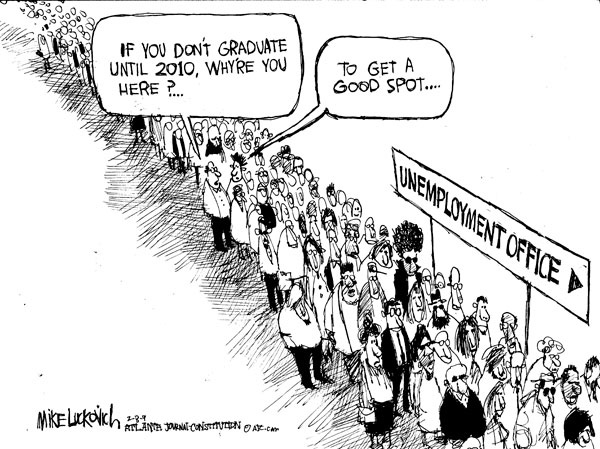
The list of industrial countries wishing to depreciate their currencies is not matched by a list of emerging economies happy to let their currencies appreciate significantly.
As a result, foreign exchange tensions are mounting, and the price of gold has been driven to a new record level.
This week will shed light on whether policymakers can do anything to deal with these two issues. If they continue to stumble and hesitate, what has been simmering may well come to a full boil in the next few months.
--------------------------------------------------------------------------------------------------------------------------
You may ask, “Who cares about these global economic issues?” The reason to be concerned is that the global economy has a very real impact on the U.S. economy, for good or for ill. The global community is now intertwined with each other in ways never before experienced. We’re all in it together.
Let’s hope that the power brokers, government bureaucrats and ivory tower economists know what they’re doing for the stakes are extremely high.
Tuesday, April 13, 2010
The Impact of the Exploding Federal Deficit
Doug Marshall, CCIM
Market Assessment
Set aside all the arguments for or against the recently passed health care bill. There are good, altruistic people on both sides of the debate that want what’s best for this country.
Forget all that and simply ask yourself this: Where’s the money to pay for it?
 Take a look at this simple but frightening chart whose sources are the Congressional Budget Office (in red) and the White House (in orange).
What they are reporting is the best possible scenario – the most optimistic projection that anyone can come up with.
Also remember that whenever Congress passes a new entitlement program, without exception, its estimated cost is always substantially underestimated.
Here’s what the graph summarizes. The Bush administration inherited a surplus from the Clinton years.
But tax cuts, the response to 9/11, and a Republican Congress that spent money like drunken sailors drove the federal government into deficits of around a third of a trillion dollars, annually.
Then, in 2008, the Democrats’ first year in charge of Congress took the deficit up toward half a trillion dollars. Then came the unprecedented deficit of 2009, the year of the financial meltdown on Wall Street and the near collapse of the financial services sector worldwide.
Arguments can be made that some of this spending was absolutely necessary to avoid an economic catastrophe. I am willing to give the Democrats the benefit of the doubt. We will never know for sure.
But now focus on the remaining part of the graph – the years going forward. The projections, mind you, are what the sponsors of “health reform” say will happen if everything goes right for the next 10 years – if all the optimistic assumptions work just the way they hope they will.
So what’s the solution? Can we grow our economy fast enough to avoid these deficits? I don’t believe so. Can we tax ourselves to a balanced budget? Not possible.
Do our politicians have the political will to make difficult spending decisions that would reduce our outlays in entitlement programs like Medicare, Medicaid, Social Security, and now health care?
Don’t count on it.
What other alternatives are there? There are really only two: 1) Borrow at levels that are unprecedented in size at a time when the global buyers of our paper – China, Japan and other countries - are beginning to slow their purchases of our US Treasury bills; or 2) expect massive hyper-inflation caused by the government’s ability to print money.
Dr. John Baen, a professor at the University of North Texas, recently spoke to a commercial real estate conference in southern Oregon.
He predicts a 20% chance of a depression and an 80% chance of hyper-inflation, with very little chance of something in between.
Not a rosy picture... My bet in on inflation and, if that is true, how do you best prepare yourself and your clientele for such an event? Historically, what assets benefit during times of inflation?
One of them is real estate of all kinds, but especially commercial real estate that is leveraged with long-term, fixed rate debt.
I believe that those who lock in long-term fixed rate loans before interest rates inevitably begin to rise are going to be the big winners in this coming era of out of control federal deficits.
Sources:
It Takes Money by Joel Belz, World magazine, April 10, 2010
Comments by Dr. John Baen at the Southern Oregon Real Estate Marketing Conference, April 1-2, 2010.
Thursday, April 1, 2010
It’s The Same All Over


The concern that is exhibiting itself in every economic circle of thought isn’t limited to the ramifications that the popping of such a bubble would have on China’s economy. The effect of such a burst would have worldwide implications.
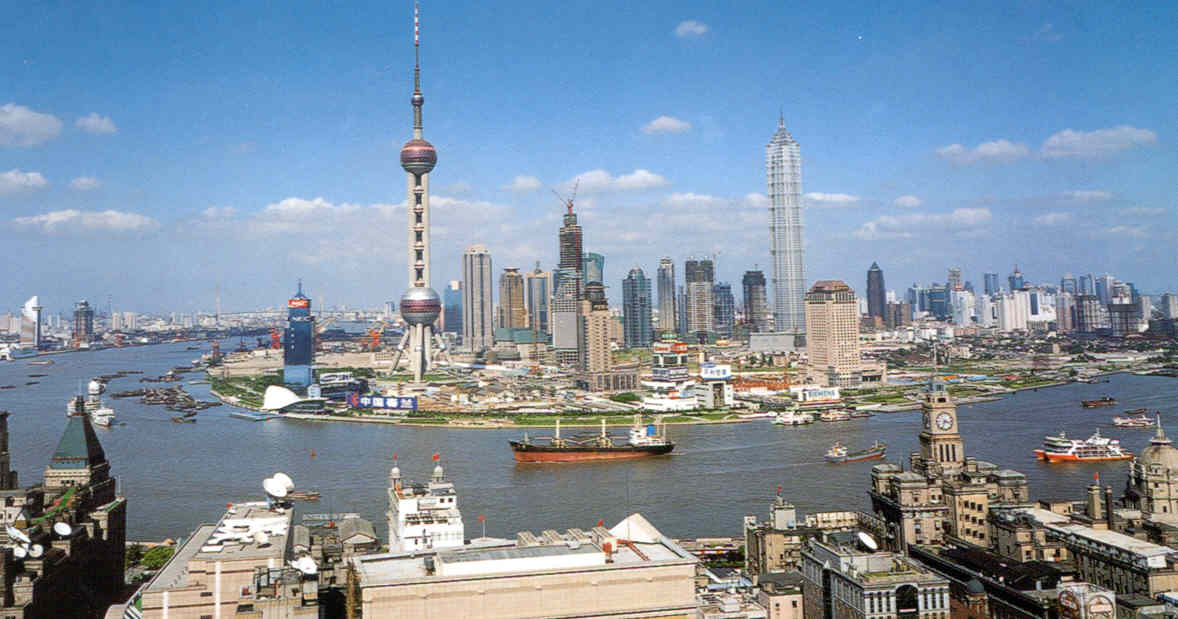
And yet, just as economic recovery appears to be taking hold in other nations, a collapse of the real estate market in China will threaten its demand for goods from other nations across the globe adversely impacting the feeble recovery here and abroad.
The real estate market in China has been the secret to the success there, in many ways. State-run developments and projects have continued to build massive housing projects, due to an insatiable demand which is fueled by rising prices of homes, apartments, and other properties.
Those who can afford it are buying homes to flip, as investments. And, reflecting the disparity of income levels within China, the poor are left without low-income housing consideration.
The rate at which these buildings – apartments and condos – are going up is simply astounding. Their locations often bewilder. Prices for high-end apartments, in Shanghai alone, rose 54% through September. Apartments across major cities will often cost between $300 and $500 per square foot – if you can get them.

One economist will predict a massive downturn one quarter only to be embarrassed by a huge upswing and larger gain than ever the next. Market analysts request that economists and prognosticators wait and see, watching the technicals that are still proclaiming China to be a safe bet.
Sources:
Dexter Roberts, BusinessWeek
Bill Powell, Bharat Chronicle March 30, 2010
Mary Woo, Minyanville Business Markets, March 29 2010
Tuesday, October 6, 2009
The Fed Pulls The Rug Out
Market Assessment
Published September 30, 2009
 And the hits just keep onnnnn comin’!
After having committed earlier this year to a policy of artificial stimulus of the mortgage market, the Fed made the announcement on September 23rd that they were withdrawing – or at least not expanding – direct purchases of mortgages and government debt.
Most “experts” believe this decision to stop buying mortgages and government debt will have a dramatic long-term impact on interest rates.
Shown below are the opinions by knowledgeable sources about this monumental decision that we find most provocative:
· With the amount of money the Federal government has pumped into the economy, almost every economist is predicting the return of hyper-inflation. The Federal Reserve’s only remedy for that will be to raise interest rates which, as we all know, is counter to business development and growth. 1
Surprisingly, I have also seen this premise directly contradicted, including this one by the Fed: “the Committee expects that inflation will remain subdued for some time.”
Another humdinger of a quote regarding the recent Fed decision:
· These purchases helped the Federal government continue its stimulative deficit spending over the cries of budget hawks in Congress, it helped keep a lid on borrowing rates throughout the economy.
 Thus, we had a unique situation where stocks were rising without a concurrent and ultimately self-defeating rise in Treasury yields – enjoying a daily slice of chocolate cheesecake without an expansion in the waistline.
Now the equity market must operate in a more normal environment where rising stock prices result in higher interest rates. 2
The Federal Open Market Committee, which made this decision and other decisions affecting monetary policy, seems itself to be at odds as to what inflation is going to do, how much slack is in the economy, and how much intervention is necessary or healthy.
While it’s disappointing to see the Fed’s purchases of mortgages and government debt being discontinued, surely commercial real estate is going to require a return to more realistic – if painful – conditions in order to right itself well.
Perhaps not quickly, but well. PriceWaterhouseCooper, for one, is forecasting that the commercial real estate market will remain in recession until at least 2012. 3
It’s the byword of capitalism: survival of the fittest. And, while the fittest are surviving, look for more vacant storefronts and a shorter lender list, as the lions have their way with the lambs.
Sources:
1 Commercial Real Estate Will Not Benefit From The End Of The Current Recession, by Robert Canter of Gerson Lehman Group, Sept 8 2009
2 Did The Fed Just Kill The Bull Market? by Anthony Mirhaydan of Top Stocks Blog – MSN Money, Sep 23 2009
3 Commercial Real Estate Recession to Keep Going, by SquareFeetBlog.com, Sep 15 2009
The China Effect On The Dollar
Market Assessment
Published September 15, 2009
 During America’s recent economic swan dive, we must admit that we have issued some dire warnings and predicted some difficult times.
But we’ve also come to the conclusion that we need to focus our attention these days on some key financial indicators instead of rambling all over the place about the bad news.
Right now, we believe, the key financial indicator to watch is the health of the dollar.
The almighty dollar has been for many investors the most important, reliable, and used currency in the world. The question is – what is the dollar’s long-term outlook?
To prognosticate accurately, one must think globally because the dollar really isn’t ours anymore. It belongs, in the purest sense, to whoever has the most of them. Um, that would be China (see chart below).
 As we wend our way through the economic morass, America has counted on the ability for China and Japan, among others, to continue buying Treasuries at their typical rate.
Right now, though, that demand has slowed, especially for long-term Treasuries.
This is bad news for Washington. When investors got nervous about the crazed spending, borrowing, and printing of money from the Bush & Obama administrations, they backed off on the purchase of Treasuries, which is how Washington raises cash to fund their agenda.
Now, to make matters worse, China has actually begun selling, in net terms, their massive holdings of Treasuries.
And, according to Mike Larson of MoneyandMarkets.com, “One thing seems clear: that one of Washington’s most dependable sources of loans to finance our out-of-control deficits is drying up.”
Mr. Larson quotes the following figures in coming to this conclusion:
· In 2006, China and Hong Kong accounted for more than 50% of the increase in the amount of Treasury debt sold to the public.
· In 2008, their share had fallen to 22% of newly issued treasuries at the same time that the U.S. government increased its public debt by a record $1.2 trillion.
· In the first half of 2009, China and Hong Kong acquired only 9% of the more than $800 billion worth of Treasury bonds that were sold.
· In June of 2009, China actually reduced its note and bond holdings by $25 billion.
 The sour appetite for Treasuries across the board is a concern to the Federal Reserve. Without a robust demand for U.S. Treasuries, treasury rates will have to increase to spark additional interest.
Higher treasury rates mean higher across the board rates for everything from auto loans, home loans, business loans, you name it.
So what would be the upshot of all this? At the least, higher interest rates would be inevitable as a result of China more and more leaving Treasuries where they sit on the table.
And in that process, the hope of vigorous economic recovery gets squashed.
Doggone ripple effect…!
Sources:
China Is Now A Net SELLER Of U.S. Treasury Notes And Bonds!, Mike Larson, moneyandmarkets.com (9/6/09)
U.S. Concerned on Debt Demand, Treasury’s Dollar SaysBloomberg News (9/11/09)
Thursday, August 27, 2009
How to Survive the Economic Downturn - Part 1
by Doug Marshall, CCIM
Published August 27, 2009
Back for an “encore performance” is a 3-part series that I sent out in January. For those of you who missed it the first time or those who want to re-read again, read below. Enjoy!
Watching the harmful repercussions of this bad economy is like watching a train wreck in slow motion: there is very little you can do to minimize the carnage. It’s going to happen, with or without you. The best you can hope for is that you personally steer clear of its path of destruction so that it doesn’t suck you down, too.
Those of us who work in real estate sales or some related field, such as finance, title and escrow, legal, etc, have been and will continue to be particularly hard hit by the dramatic slowdown in the economy. Heck, we helped bring on this crisis. It only stands to reason we would be some of the most affected.
But there are some time-proven principles, if applied that can help us out of this quagmire. In a three-part series, beginning today, I will share eight principles to help you avoid being a victim of the current economic decline.
For those of us in any kind of sales profession, we learned the critical importance of marketing ourselves when we got started. It wasn’t easy, but we learned to make those telephone calls or attend those networking meetings where we met potential customers for our business.
We learned the hard way that our ultimate success was dependent almost solely on how many marketing contacts we made each week.
But when times are good, which they have been for many years, we slowly drift away from the discipline of making those marketing contacts, instead relying on satisfied clients to refer business back to us.
Now the phone has stopped ringing. What do we do? We go back and do what made us successful in the first place. In a slow economy like this, marketing ourselves becomes more critical than ever.
At the beginning of every year my wife and I go to the beach for a weekend to plan for the year. We prepare questions about our personal and professional lives that we ask ourselves, reflect on, and discuss with each other.
As I pondered these questions over my planning weekend, I had an epiphany. The cartoon light bulb actually went on over my head. It was this: all of these “important” issues were a distraction from the overall point of focus for this year, which is to market myself like there is no tomorrow.
To do anything else would be a distraction from the immediate need of the moment, which is to get business through the door.
What one thing do you need to do this year that will best help you survive this economic slowdown? Identify it, and forget all the other things that are begging for your time and effort but which are simple distractions to the bigger picture.
Determine What Differentiates You From Your Competition
Consider doing a brutally honest self-assessment about your product or service. What core competency distinguishes you from your competition? Conversely, what do you do that is no different than anyone else?
If you can’t differentiate your product or service from that of your competition you’re in deep trouble. You end up being a commodity in the eyes of your clients; just one of many possible choices. Let’s face it, there are no real differences between true commodities, whether you’re talking about corn or a barrel of oil.
On the other hand, I marvel at the loyalty of those real estate investors who will only use the services of one particular title company. How does a title company, providing near-identical services as the next, generate such loyalty? They do it by delivering a quality of service that exceeds the customer’s expectations. And they do it consistently.
Hence the repeat business that many of them enjoy.
In order to succeed in a slowed-down economy, abandon or at least downplay those things you do or sell that so look like everybody else’s. Focus on those things that make you unique.
End, part one
Thursday, August 20, 2009
Small Upticks - We'll Take 'Em!
Doug Marshall
Market Assessment
Oh, how exciting! Houston, we have a positive indicator.
For months, the news on the economy, especially as it relates to commercial real estate, has been gloomy.
Looking at the numbers, it’s been too difficult for us to believe that the “recovery” considered underway for the economy in general is going to apply, in real-time, to commercial real estate.
We were, after all, the last shoe to drop in the global downturn. Further thuds are pending, we have said: inflation, huge defaults in commercial loans… just more bad news.
And, in dissecting these numbers, we have of course decided to approach with caution, bringing out the poking stick to try to determine how real these numbers are.
The unemployment rate, according to this report, dropped from 9.5% to 9.4% during July.
It’s an encouraging sign to many that the jobless rate shows any improvement at all, when many were predicting 300,000 lost jobs instead of the 247,000 actually reported.
However, it’s important to maintain perspective and context:
- This is a definitive, historical trend. As seen below in Barron’s Chart Of The Day from August 7, a one month drop in unemployment does tend to happen when a recession has ended.
 So it’s encouraging that this might be considered empirical evidence, pointing to recovery.
- On the downside, this certainly doesn’t mean that unemployment will continue decreasing. A third of those currently out of work are long-term unemployed. And these workers will find it harder to re-enter the work force, no matter how unemployment is slowing. Many have given up looking for work and, when they decide to try again, it’s going to play with that number.
Still, at this point in our economy’s spiral, we’ll take any positive number that’s based on real improvement. Not caution to the wind, mind you, but crossed fingers…
Sources:
Barron’s Chart Of The Day, August 7, 2009
(1) Larry Doyle, http://www.senseoncents.com/
Tuesday, August 11, 2009
That's What I Said!
Published August 4, 2009
Yes, hindsight is 20/20. Yes, wearing the mantle of officialdom often means having to censure oneself and not say what you know, for the greater good.
 Shown below is a very illuminating speech by Ben Bernanke, current Chairman of the Federal Reserve, back in 2002 before he attained his lofty position and had reason to hold his tongue.
After months of telling you that I believe inflation is on the horizon, it depresses me to realize that Bernanke knows it, too, and has for some time. He opines:
“The conclusion that deflation is always reversible under a fiat money system follows from basic economic reasoning.
A little parable may prove useful: Today an ounce of gold sells for $300, more or less. Now suppose that a modern alchemist solves his subject's oldest problem by finding a way to produce unlimited amounts of new gold at essentially no cost.
Moreover, his invention is widely publicized and scientifically verified, and he announces his intention to begin massive production of gold within days.
 What would happen to the price of gold? Presumably, the potentially unlimited supply of cheap gold would cause the market price of gold to plummet.
Indeed, if the market for gold is to any degree efficient, the price of gold would collapse immediately after the announcement of the invention, before the alchemist had produced and marketed a single ounce of yellow metal.
What has this got to do with monetary policy? Like gold, U.S. dollars have value only to the extent that they are strictly limited in supply.
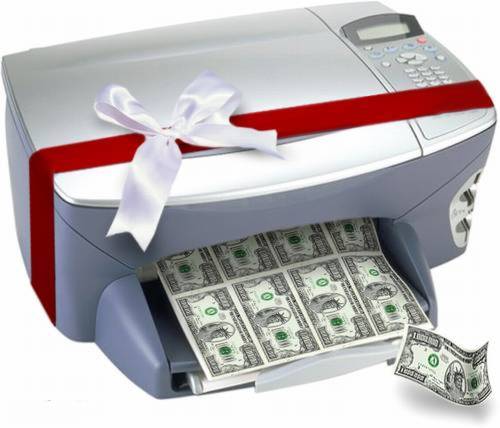
But the U.S. government has a technology, called a printing press (or, today, its electronic equivalent), that allows it to produce as many U.S. dollars as it wishes at essentially no cost.
By increasing the number of U.S. dollars in circulation, or even by credibly threatening to do so, the U.S. government can also reduce the value of a dollar in terms of goods and services, which is equivalent to raising the prices in dollars of those goods and services.
We conclude that, under a paper-money system, a determined government can always generate higher spending and hence positive inflation.”
This from the one man in the nation, perhaps in the entire world, that has the most weapons at his disposal to bring inflation under control.
Over the past several months the Bush administration followed by the Obama administration have poured trillions of dollars of money we don’t have to prevent a banking collapse, to bail out the American auto industry and then to stimulate the economy out of our current recession.
This excessive money creation by the Federal Reserve has to adversely impact the value of the dollar.
The verdict is still out whether they will succeed on any of these fronts but this we know for sure: the once mighty dollar is going down for the count.
Source:
Erste Group Research reprint of Ben Bernanke, “Deflation: Making Sure ‘IT’ Doesn’t Happen Here.” November 21, 2002. http://www.federalreserve.gov/boarddocs/speeches/2002/20021121/default.htm
Tuesday, June 16, 2009
The Fourth Horseman of the Apocalypse - When?
Market Assessment
Published June 16, 2009
Many have written on the reasons and rationale for the current market and economy downturn, including us. But for many struggling in this debt-toxic atmosphere, especially in the real estate industry, the more pressing question remains: what’s still to come?
 Prognosticators abound but we are intrigued by the long-maintained predictions of Dennis Torres, a California broker and head of Pepperdine University’s Real Estate Operations department.
Mr. Torres spoke out three years ago about the impending doom that is the current housing market crisis. In an article for Realtor Magazine, he has put into context the “four horsemen of the real estate market apocalypse” that that we are currently or will be experiencing.
The first three have come to pass. They have wreaked havoc on the U.S. economy and the shock waves continue: 1) the collapse of the sub-prime loan market followed by losses in the prime mortgage market; 2) high and increasing unemployment; and 3) the resulting escalation of the burden of consumer debt, especially credit card debt, on the economy.
 But Mr. Torres’ “fourth horseman” remains on the horizon and could have a more long-lasting effect on the economy, and the real estate industry, than many believe or are talking about. And that ghost of ill wind is the one of rampant inflation.
The reasons are simple. Where are our bailouts to the banks, the auto industry, etc., coming from? How is our government paying for the wars? They’re printing money, of course, and you can’t do that without it losing some of its intrinsic value.
In the real estate world, what does this mean? Mr. Torres believes inflation will take hold within the next two years. Before that time home values will decline then stagnate until 2015 before climbing due to inflation.
The difficulty for consumers, in keeping their homes and paying their bills with paychecks that don’t match rising inflation, is going to have good and bad effects on the markets.
 High prices for durable goods will be matched, says Mr. Torres, with increasing values in homes as the prices go higher.
And Mr. Torres doesn’t fear another housing market collapse, as those prices will be “based on the intrinsic value of the then-current dollar.”
So how will inflation affect commercial real estate? Rents and expenses will likely keep pace with inflation. So will interest rates.
Who will be the winners if inflation is rampant? Those lessees who negotiate favorable lease rates today and lock in their rates for as long as possible will be one group of winners.
And those borrowers who finance a property this year with long-term fixed rates will look back years from now and crow about how farsighted they were to realize the importance of locking in a rate when rates were comparatively low.
 Mr. Torres calls the potential for high inflation “unsettling.” But in reality there will be winners and losers in this type of real estate market.
To be one of the winners will take a positive attitude, seeing the opportunities before us, and having the foresight to adapt real estate skills to take advantage of the market.
Source: